
What Happens When a Will Crosses State Lines Into New Mexico
Key Takeaways: An out-of-state will generally holds up in Santa Fe probate if it was valid where signed, since New Mexico follows the Uniform Probate Code and uses a standard two-witness requirement. A will already accepted in the decedent’s home state typically receives favorable treatment through ancillary probate without re-litigating validity. The biggest probate trigger in New Mexico is real estate located here, because property is governed by the law of the state where it sits, often requiring a secondary proceeding that adds cost. Validity questions usually arise only with unusual documents like handwritten or oral wills, and New Mexico’s community property rules can affect how provisions are interpreted. When there is no will, New Mexico’s intestacy laws govern local property, though the state imposes no estate or inheritance tax. Consulting a local Santa Fe estate planning attorney is the safest way to confirm what your situation requires.
When someone moves to New Mexico or owns property here while living elsewhere, their out-of-state will does not become useless. New Mexico courts routinely recognize wills executed in other states, though recognition does not guarantee a smooth, automatic transfer. Where the person lived, where the property sits, and whether a court has already accepted the will all shape what happens next.
If you are an heir, beneficiary, or family member trying to understand whether a loved one’s out-of-state will is enforceable here, the team at Walk-in Wills can walk you through your options in plain English. Call us at (505) 903-7000 for a one-hour free consultation, or reach out through our online contact page to get clear answers before deadlines slip by.
Why New Mexico Usually Honors a Will Signed Elsewhere
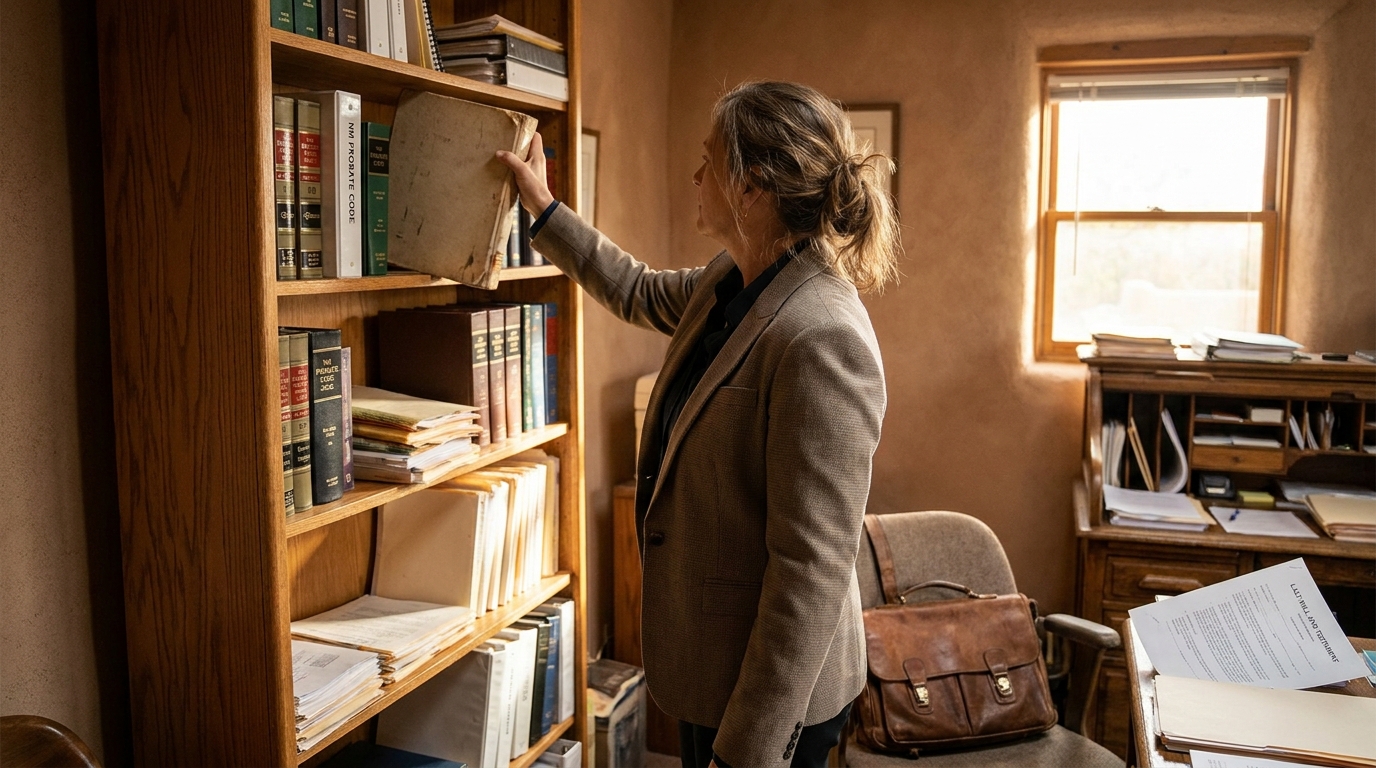
New Mexico’s probate framework is built on a national model, which is why out-of-state wills are typically accepted here. The state’s Probate Code follows the Uniform Probate Code, adopting its section numbers and textual content. Because many states share this foundation, a will satisfying the formalities where it was signed will often satisfy New Mexico’s standards. New Mexico’s foreign wills statute can recognize a written will as valid if its execution complied with the law where it was signed or where the testator was domiciled, even if it would not meet New Mexico’s own formalities.
A will validated in the decedent’s home state generally receives favorable treatment in ancillary probate. Once the home state court (the domiciliary proceeding) accepts the will, the New Mexico court in the ancillary proceeding generally accepts it without requiring further proof of validity. This recognition prevents families from re-litigating validity from scratch, though outcomes vary with specific facts.
💡 Pro Tip: If a will was already admitted to probate in another state, keep certified copies of both the will and the court’s order. Those documents allow a New Mexico court to accept the will efficiently.
The Real Trigger for Probate Here: Property Location
Real estate is the single biggest reason an out-of-state will ends up in a Santa Fe courtroom. Real estate is governed by the law of the state where it is located, not where the owner lived. If someone living in Texas or Colorado owned property in New Mexico, that property may require probate here even though the rest of the estate is handled in the home state.
This creates the need for ancillary probate in New Mexico. Ancillary probate is the secondary proceeding handling property located in a state other than where the deceased person lived. According to a widely used legal resource on ancillary probate in another state, this second proceeding exists because each state controls the real property within its borders. Personal property and financial accounts are often handled in the home state, but New Mexico land answers to New Mexico law.
Ancillary probate carries real costs that reduce what heirs receive. The estate often needs to retain counsel in the second state using estate funds, which means less for inheritors. A simple, uncontested informal probate in New Mexico generally takes six to twelve months, involving gathering and valuing assets, paying debts, and distributing what remains. Planning ahead can sometimes reduce or avoid this duplication.
Does New Mexico’s Will Validity Standard Match Other States?
New Mexico requires a valid will to be in writing and signed by the testator and at least two witnesses. This two-witness rule, reflected in NMSA 1978, Chapter 45, is the formality that most often determines whether a will holds up. Because most states use a similar two-witness execution standard, wills from other states frequently meet this requirement.
Problems tend to arise only when a will was executed under unusual rules. New Mexico does not recognize unwitnessed handwritten (holographic) wills or oral (nuncupative) wills created under its own law. A handful of states recognize those documents under narrow conditions. When such a will is presented here, New Mexico’s foreign wills statute can validate it, but that statute applies to written wills valid where executed, so oral declarations elsewhere generally will not be recognized. When the execution method is uncommon, having the document reviewed by an attorney before filing can prevent surprises.
💡 Pro Tip: If your loved one signed a will in a state allowing handwritten or unwitnessed wills, do not assume it will be rejected here. The validity question turns on the law where it was signed and requires individualized review.
New Mexico is a community property state. This affects how property is characterized and how an out-of-state will’s provisions may be interpreted. A will drafted under a common-law property regime can interact unexpectedly with New Mexico’s community property rules, particularly for married couples.
How an Estate Planning Attorney in Santa Fe Guides the Process
Working with a local, licensed estate planning attorney in Santa Fe gives families an advocate who knows both the statutes and local courts. New Mexico’s Probate Code contains specific provisions for recognizing wills executed in other states, and applying those provisions correctly takes familiarity with how local judges and clerks handle filings.
A trusted attorney can help you confirm whether full ancillary probate is even necessary. Not all property must pass through probate. New Mexico allows certain assets to pass free of probate or through simplified procedures, especially smaller estates or property held jointly or in trust. Understanding which assets require court involvement is often the first cost-saving step, and you can explore related guidance through our estate planning Santa Fe NM resource library.
Common situations where local guidance proves valuable:
- A spouse or child inherited New Mexico real estate under a will signed in another state
- An executor named in an out-of-state will needs authority to act on property here
- A family is unsure whether the home-state will satisfies New Mexico requirements
- An heir wants to confirm the estate qualifies for a simplified process
The executor named in the will typically carries this responsibility forward. When a will names an executor, that person manages probate; if no will exists or none is named, the probate court appoints an administrator. Some states even offer a shortcut for foreign executors, allowing them to file the home state’s letters of authority instead of obtaining new ones.
💡 Pro Tip: Bring the original will, any home-state probate orders, and a list of New Mexico assets to your first consultation. Having these ready lets your attorney assess your situation in a single sitting.
What Happens If There Is No Will at All
Without a will, New Mexico applies its own intestate succession laws to property located here. When the deceased person left no will, ancillary probate can become more complicated because each state applies its own rules to the property within its borders. For New Mexico real estate, New Mexico’s intestacy statutes control, regardless of where the owner lived.
New Mexico’s intestacy distribution depends on whether property is community or separate. The general probate process, summarized in this helpful overview of common probate questions, includes proving a will is valid when one exists, inventorying property, paying debts and taxes, and distributing what remains. The table below outlines how New Mexico divides property for a married person with children who dies without a will.
| Property Type | Surviving Spouse | Children |
|---|---|---|
| Community property | All to spouse | None |
| Separate property | One-fourth | Three-fourths, in equal shares |
New Mexico does not impose a state estate tax or inheritance tax. This simplifies the financial picture for out-of-state will holders who own New Mexico property, though federal rules and other states’ taxes may still apply.
Frequently Asked Questions
1. Will my parent’s will from another state need to be redone in New Mexico?
Not usually. A will valid where signed is generally honored here, especially once accepted in home-state probate. Re-execution is rarely required, but a review can confirm it meets New Mexico requirements.
2. Do I have to open probate in New Mexico if my family member lived in another state?
Possibly, if they owned New Mexico real estate. Because property is governed by the law of the state where it sits, New Mexico land often requires ancillary probate even when the main estate is handled elsewhere.
3. How long does informal probate take in New Mexico?
A simple, uncontested informal probate generally takes six to twelve months. Timelines vary based on debts, asset complexity, and heir cooperation.
4. What if I believe the will itself is flawed or someone was pressured?
Concerns about validity should be raised promptly. If you suspect procedural defects or improper influence, a Santa Fe probate attorney can review the grounds and deadlines that may apply.
5. Can a foreign executor act on New Mexico property?
Sometimes through a streamlined filing. Certain states let foreign executors file the home state’s letters of authority rather than obtaining new ones, though New Mexico procedures should be confirmed case by case.
Bringing Your Out-of-State Will Home to Santa Fe
An out-of-state will can hold up in Santa Fe, but the path depends on where the property sits, how the will was signed, and whether a home-state court has already acted. New Mexico’s adoption of the Uniform Probate Code, its two-witness validity standard under NMSA 1978, Chapter 45, and its community property and intestacy rules all shape the outcome. With realistic expectations and the right documents, most families find the process manageable.
When you are ready for clear guidance, the experienced team at Walk-in Wills is here to help you protect what your loved one intended. Call (505) 903-7000 to schedule your free one-hour consultation, or send us a message through our secure contact form so an estate planning attorney in Santa Fe can answer your questions and help you take the next step with confidence.