
Resolving Trust Questions Without a Courtroom
Key Takeaways: A New Mexico nonjudicial settlement agreement is a written contract that lets interested persons, typically the trustee and affected beneficiaries, resolve certain trust questions without a court order, under Section 46A-1-111 NMSA 1978. It can address matters including interpreting trust terms, approving trustee accountings, handling trustee transitions or compensation, transferring administration, and settling trustee liability. To be enforceable, every agreement must pass a two-part test: it cannot violate a material purpose of the trust, and it can include only terms a court could have properly approved. Common pitfalls include missing required signers, vague drafting, and overreaching terms. While these agreements are nonjudicial by design, any interested person may seek optional court approval for high-stakes matters. Thoughtful drafting and complete consent protect both trustees and beneficiaries.
A New Mexico nonjudicial settlement agreement lets people connected to a trust settle certain questions in writing without asking a judge to weigh in first. If you are a trustee trying to confirm how an ambiguous clause should be read, or a beneficiary who wants a trustee’s accounting approved, this tool saves time and expense. Interested persons may enter into a binding agreement with respect to any matter involving a trust, subject to validity limits we will walk through below.
If you are navigating a trust matter and want a plain-English conversation before you sign anything, Walk-in Wills is here to help. Learn more at Walk-in Wills, call (505) 903-7000, or reach out through our trust consultation request page to schedule a one-hour free consultation for a new estate-planning matter.
What a New Mexico Nonjudicial Settlement Agreement Actually Does
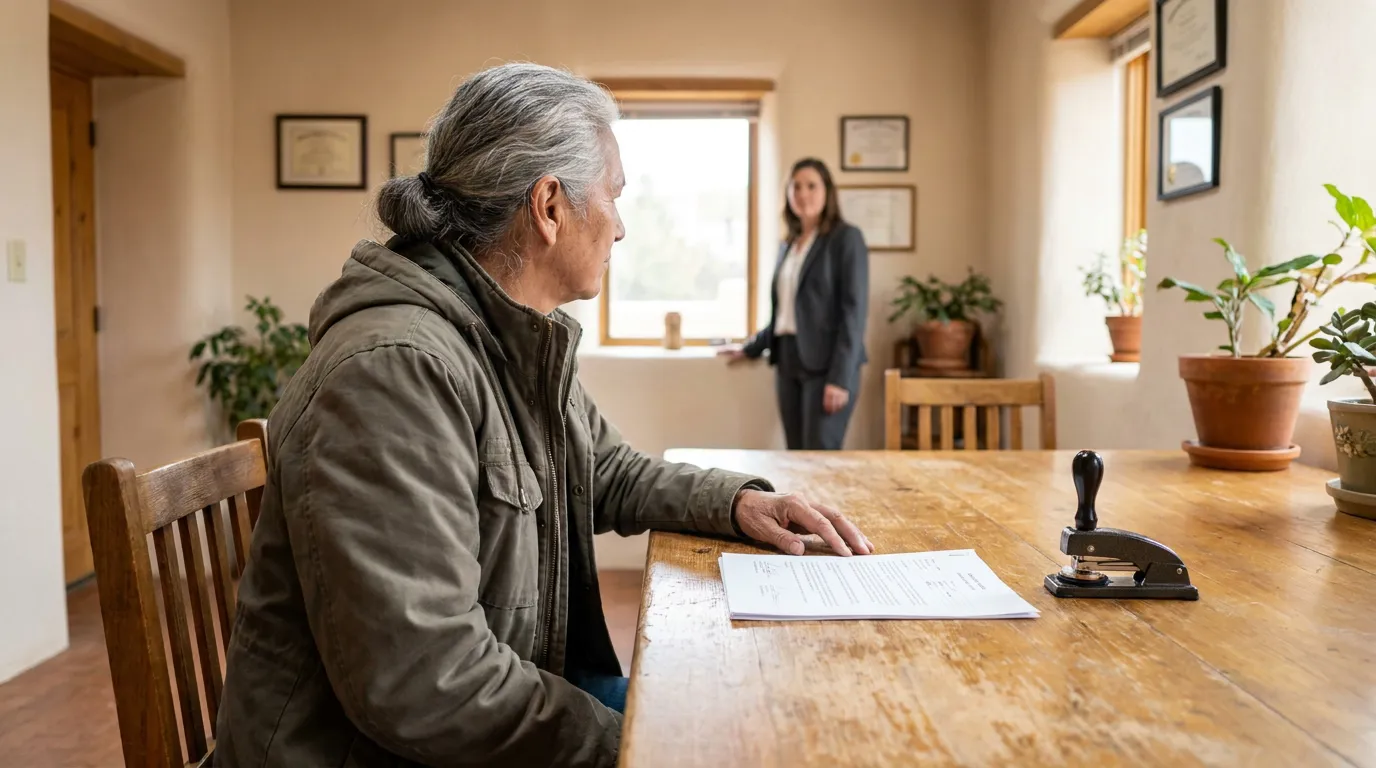
The new mexico nonjudicial settlement agreement is a written contract among interested persons that resolves a defined trust question without a court order. New Mexico adopted this mechanism as part of its version of the Uniform Trust Code, codified in Section 46A-1-111 NMSA 1978.
A nonjudicial settlement agreement is valid only to the extent it does not violate a material purpose of the trust and includes terms and conditions that could be properly approved by the court under the Uniform Trust Code or other applicable law.
This rule flows from a national framework. New Mexico’s provision is part of a broader statutory scheme governing trust administration. For wider context, our overview of the New Mexico Uniform Trust Code explains how these pieces fit together. That background matters because a settlement agreement borrows its limits directly from the code.
Who Counts as an "Interested Person"
Not everyone with an opinion about a trust can sign one of these agreements. The statute limits participation to interested persons, a defined term with real consequences.
"Interested persons" means persons whose consent would be required in order to achieve a binding settlement were the settlement to be approved by the court.
In practice, that usually includes the trustee and the beneficiaries whose interests are affected.
Identifying the correct signers is often the first hurdle. Missing a necessary party can leave an agreement vulnerable later. Representation rules under the code may allow one person to represent another, such as a parent representing a minor, but those rules are technical. A local attorney can confirm that everyone whose consent is legally required is at the table.
The Six Matters You Can Resolve
New Mexico’s statute lists specific categories of matters that a nonjudicial settlement agreement can address. The enumerated matters include:
- Interpretation or construction of the terms of the trust
- Approval of a trustee’s report or accounting
- Directing a trustee to refrain from an act, or granting a trustee a necessary power
- Resignation or appointment of a trustee and determination of a trustee’s compensation
- Transfer of a trust’s principal place of administration
- Liability of a trustee for an action relating to the trust
This list is broad but not exhaustive. The statute lets interested persons agree on any matter involving a trust, and these six items are illustrative examples. These agreements are designed for cooperative resolution of administrative and interpretive questions, not for rewriting a trust in ways the settlor never intended. The real boundary is the validity test: if a proposed term would violate a material purpose of the trust or is something a court could not have approved, court involvement may still be necessary.
The Validity Limit Every Agreement Must Clear
Every New Mexico trust settlement of this kind must pass a two-part test to be enforceable. First, it cannot violate a material purpose of the trust. Second, it must include only terms a court could have properly approved. This limitation is carried into every UTC-based state statute.
The "material purpose" requirement is where many agreements run into trouble. A material purpose is generally a core reason the settlor created the trust, such as protecting a beneficiary from creditors or delaying distributions until a certain age. A spendthrift provision, for example, often reflects a material purpose. Courts interpret these protections carefully, so an agreement that quietly undoes them may not hold up.
💡 Pro Tip: Before signing, read the trust’s stated purposes and distribution standards side by side with your proposed agreement. If the settlement would soften or eliminate protections, get legal guidance rather than proceeding on assumption.
How the Process Typically Works
In a typical New Mexico trust matter, the process moves from identifying the question to circulating a signed written agreement. The trustee and beneficiaries first pin down the precise issue, whether it is an ambiguous clause, an accounting to approve, or a trustee transition. Then interested persons negotiate terms that resolve the matter while respecting the trust’s purposes. The primary source for these rules is the official legislative bill enacting New Mexico’s trust code.
Documentation is the part trustees should take most seriously. A fiduciary’s job is to demonstrate adherence to the trust’s terms, and a well-drafted agreement is strong evidence of that compliance. Careful drafting also reduces the risk that a beneficiary later argues the terms were unclear. Working with counsel on proper execution helps ensure it is done correctly the first time.
When Court Approval Still Makes Sense
Even though these agreements are nonjudicial by design, the statute preserves a path to court. Any interested person may ask a court to approve the agreement, generally to confirm that representation was adequate and that the terms could have been properly approved. This optional review adds certainty when the stakes are high, the beneficiaries include minors, or the parties want a judicial stamp on the outcome.
Choosing court approval is a judgment call that depends on the facts. For straightforward interpretive questions among cooperative adults, a well-drafted agreement often stands on its own. For sensitive matters involving trustee liability or vulnerable beneficiaries, seeking approval may be prudent.
| Feature | Nonjudicial Agreement | Optional Court Approval |
|---|---|---|
| Who initiates | Interested persons | Any interested person |
| Speed | Generally faster | Slower, adds a hearing |
| Best for | Routine, cooperative matters | Higher-risk or sensitive issues |
| Added certainty | Contractual | Judicial confirmation |
Common Challenges and Practical Tips for Trustees
The most frequent problems trustees encounter involve missing signers, vague drafting, and overreaching terms. Each can turn a helpful agreement into a future dispute. All three are avoidable with careful preparation.
A few practical habits can protect both trustees and beneficiaries:
- Confirm every legally required consent before circulating a draft
- Match the proposed terms to the trust’s stated purposes
- Preserve records showing full disclosure to all interested persons
- Ask whether optional court approval adds meaningful protection
💡 Pro Tip: If a beneficiary asks a follow-up question two weeks after signing, having a local attorney who already knows your trust makes that answer fast and reliable.
For a deeper look at day-to-day fiduciary obligations, our resource on trust administration is a useful next step. You can review the duties, notice timelines, and title-transfer issues on our page. Understanding those broader duties helps you use a settlement agreement as part of compliant administration, not a shortcut around it.
Frequently Asked Questions
-
Does a nonjudicial settlement agreement require a judge’s signature?
Generally, no. The tool exists so interested persons can resolve certain trust matters without court involvement. That said, any interested person may still ask a court to approve the agreement to confirm adequacy of representation and proper terms.
-
Can this agreement change who receives trust assets?
In most cases, no, if doing so would violate a material purpose of the trust. These agreements resolve interpretive and administrative questions, and cannot include terms a court could not have properly approved. Whether a particular change is permissible depends on the specific trust language.
-
Who has to sign the agreement to make it binding?
All interested persons must consent. That generally means the trustee and the beneficiaries whose interests are affected. Representation rules may allow certain parties to act for others in limited circumstances.
-
Is New Mexico’s rule the same as other states?
It is similar because it comes from the Uniform Trust Code. New Mexico’s version is codified at Section 46A-1-111 NMSA 1978. For scholarly context, a New Mexico Law Review analysis of the state’s adoption of the Uniform Trust Code explains how the provisions were enacted.
-
What happens if we skip a required signer?
The agreement may be vulnerable to later challenge. Missing a necessary consent can undermine the binding effect the parties intended. Confirming the correct signers before drafting is strongly advisable.
Getting Your Trust Settlement Done Right the First Time
A new mexico nonjudicial settlement agreement can be an efficient, low-conflict way to resolve trust questions when prepared carefully and within statutory limits. The core rules are straightforward: interested persons agree in writing, the terms respect the trust’s material purposes, and the agreement includes only what a court could have approved. Still, the details around who must consent and whether a term crosses a material purpose are fact-sensitive, and small missteps can create larger problems later.
When you want an unhurried, plain-English conversation and a plan built around your actual wishes, Walk-in Wills is ready to help New Mexico trustees and beneficiaries move forward with confidence. Visit Walk-in Wills online, call (505) 903-7000, or use our secure contact form to schedule your consultation. Let us help you settle your trust matter correctly, with someone you can actually call back when a question comes up.