
Passing Down the Ground Beneath: What Happens to a Parent’s Mineral Interests in New Mexico
Key Takeaways: When a parent dies owning New Mexico mineral rights, the interest generally cannot be sold, leased, or paid out until title is legally moved out of the decedent’s name, because minerals are typically treated as real property. The first step is determining who may inherit under a valid will or, absent one, under New Mexico intestate succession and community property rules. Many families open an informal probate in the county probate court where the parent lived, seek letters appointing a personal representative, and record a personal representative’s deed of distribution in every county where the minerals sit. New Mexico’s small estate affidavit procedures are limited and generally do not transfer real property such as minerals, while complex or disputed matters must go to district court. Once the deed is recorded, heirs typically send the operator the recorded deed, letters, death certificate, and a W-9 so suspended royalties may be released and a new division order issued. Acting early can keep the paperwork simpler, and planning ahead may spare the next generation the same process.
When a parent dies owning mineral rights in New Mexico, the interest generally cannot be sold, leased, or paid out to you until title is legally moved from the deceased owner’s name into yours through probate or a comparable court-recognized process. Mineral rights are generally real property under New Mexico law, so a signed division order alone rarely settles ownership. The practical path is usually opening an estate in the county probate court, obtaining letters authorizing a personal representative, and recording a mineral deed or distribution instrument in every county where the minerals sit. The good news is that an uncontested inherited mineral rights transfer New Mexico families face is often procedural rather than adversarial.
If you are holding royalty statements addressed to a parent who has passed, the sooner you start, the simpler the paperwork tends to be. The team at Walk-in Wills helps New Mexico families sort out heirship, prepare the right transfer documents, and record them correctly the first time. Call (505) 903-7000 or schedule your consultation now to talk through your parent’s mineral interests with a licensed attorney available in person in Albuquerque or fully online.
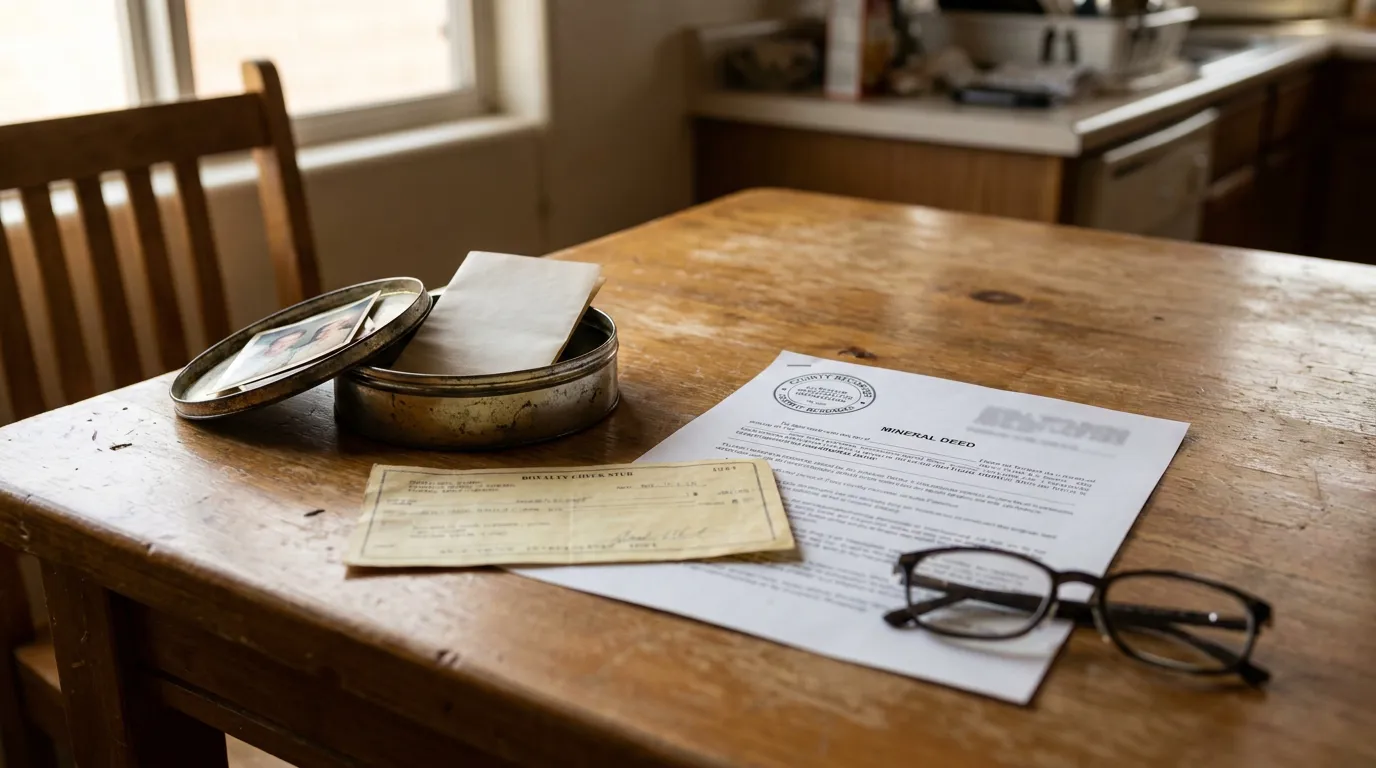
Why Mineral Rights Complicate an Otherwise Simple Estate
Mineral interests often behave differently from bank accounts and vehicles because they are generally real property that can be split, leased, and paid on for generations. A single quarter section may be divided among dozens of cousins, each holding a fractional decimal interest. Because minerals can be severed from the surface, a parent may have owned mineral acres under land the family sold decades ago and never mentioned it.
That severability can turn a modest estate into a title puzzle. Records may be spread across county clerk offices in the southeast Permian counties, the San Juan Basin, and Bernalillo County. Probate generally administers a deceased person’s estate, addressing claims and distributing property to those entitled, and that process typically supplies the chain of title an oil and gas company will want before releasing suspended funds.
Suspended Royalties and Why Operators Freeze Payments
Operators commonly place royalty payments into suspense when they learn an interest owner has died. This generally isn’t hostility toward the family; it protects the company from paying the wrong person. Suspense accounts may hold funds for years while heirs gather documents, and unclaimed proceeds may eventually be reported to the state as unclaimed property. Heirs may still claim remitted funds through the state’s unclaimed property process, again after proving entitlement.
Fractional Interests and Multiple Heirs
When several siblings inherit the same mineral tract, each generally receives an undivided fractional interest rather than a separate piece of ground. Leasing decisions, sale offers, and division orders may require cooperation among co-owners, though each can ordinarily deal with his or her own share. Families often benefit from deciding early whether to hold interests individually, consolidate them into an entity, or place them in a trust, since these choices carry different tax and administrative consequences.
Determining Who Legally Inherits the Minerals
The first legal question is not how to transfer the interest but who is entitled to receive it. If your parent left a valid will, the named beneficiaries generally control, subject to allowances, creditor claims, and spousal rights. If there was no will, New Mexico intestate succession statutes generally determine the outcome, and the concept of an heir under New Mexico law is defined by statute, not family expectation.
Community property adds another layer for married couples. Minerals acquired during marriage are generally presumed community property, while minerals owned before marriage or inherited are generally separate property, and that characterization can change who inherits what. In an intestate estate, the decedent’s one-half interest in community property generally passes to the surviving spouse, while separate property is generally divided between spouse and descendants under statutory shares. Distinguishing heirs by intestacy from beneficiaries named in a will is often critical, because a mineral deed signed by the wrong parties can cloud title for decades.
Common heirship complications we see include:
- A parent who remarried without updating an older will
- Deceased siblings whose own children now hold the interest by representation
- Minerals never listed on an estate inventory because no one knew they existed
- Prior generations of unprobated estates stacked on top of each other
- Fractions recorded under a maiden name or a variant spelling
💡 Pro Tip: Before your first attorney meeting, pull every royalty check stub, 1099, lease, and division order you can find. Property descriptions and operator names are often the fastest route to identifying which counties and wells are involved.
Opening Probate to Complete an Inherited Mineral Rights Transfer New Mexico Heirs Can Record
For many Albuquerque-area families, the process begins by opening an estate in the county probate court where the parent lived. The Bernalillo County Probate Court handles informal probate filings for county residents and issues letters authorizing a personal representative to act. New Mexico county probate courts have limited jurisdiction and may handle only informal, uncontested proceedings; formal proceedings, contested matters, will contests, and requests for court determinations of heirship or title belong in district court.
Informal probate is the more common route when there is a valid will or clear intestate succession and no dispute among heirs. Once appointed, the personal representative generally owes a fiduciary duty to act impartially, account for assets and debts, and distribute property according to the will or statutes. That duty applies to mineral interests just as to a house or savings account, and careful documentation may protect the representative later.
From Letters to a Recorded Deed
Letters Testamentary or Letters of Administration prove authority, but generally do not by themselves move title of record. The personal representative typically signs a deed of distribution conveying the mineral interest to the heirs, and that instrument should be recorded in each county where the minerals are located. If the minerals lie in three counties, three recordings may be needed. Our guidance on how to change property ownership after death walks through how title work fits into the broader estate timeline.
| Situation | Typical Path | What Gets Recorded |
|---|---|---|
| Valid will, cooperative heirs | Informal probate, county probate court | PR deed of distribution |
| No will, clear heirs | Informal probate under intestacy statutes | PR deed to statutory heirs |
| Small estate, personal property only | Statutory affidavit procedure, where eligible | Affidavit delivered to holder of asset |
| Complex, contested, or unclear title | Formal proceeding in district court | Court order plus deed |
Paths vary by estate. Eligibility for any given procedure depends on the specific facts and applicable statutes.
Notifying Operators and Updating State Records
Once the deed is recorded, the transfer is generally only useful if the companies paying royalties know about it. Heirs generally send the operator a recorded copy of the deed, the letters of appointment, a death certificate, and a completed W-9, after which the operator may issue a new division order reflecting the updated decimal interest. Expect the operator’s title department to take time, and expect follow-up requests.
State regulatory records may also need attention when producing interests are involved. The New Mexico Energy, Minerals and Natural Resources Department oversees the Oil Conservation Division, which regulates oil and gas operations and maintains well and operator records statewide. Where an inherited interest involves operatorship or well ownership changes rather than a pure royalty interest, applicable OCD filings may come into play, separate from the probate proceeding itself. Where the interest involves state or federal leases, the State Land Office or the federal leasing agency may have its own change-of-ownership requirements.
When a Small Estate Affidavit May Be Enough
New Mexico law provides affidavit procedures for certain small estates, but their reach is limited. The commonly used small estate affidavit generally applies to personal property below a statutory dollar threshold and, by its terms, does not convey real property, so an inherited mineral interest ordinarily still requires probate or another court-recognized process. Because mineral interests can be difficult to value, they can complicate eligibility analysis. An attorney can assess which procedure fits; readers shouldn’t assume an affidavit will work simply because the estate feels small.
💡 Pro Tip: Ask the operator in writing for a statement of suspended funds attributable to your parent’s interest. Knowing the dollar amount in suspense often helps a family decide how quickly to move and which procedure makes sense.
Practical Tips for Oil and Gas Heirs New Mexico Families Should Know
Mineral title problems can compound with every year and generation that passes without action. Waiting until a leasing agent knocks on the door often means negotiating under time pressure with incomplete records. Acting while siblings are cooperative and documents still exist is generally easier than reconstructing a chain of title thirty years later.
Proof of ownership matters well beyond royalty checks. New Mexico Legal Aid’s work on inheritance and property issues highlights how families who never completed probate often cannot prove they own inherited property, which can block access to relief programs and other benefits. The same gap can prevent heirs from leasing, selling, or borrowing against a deceased mineral owner’s interest.
Keeping the Next Generation Out of the Same Position
One of the most effective fixes for heirship mineral interests is planning before the next death occurs. Once you hold clear New Mexico mineral title in your own name, a revocable trust (when properly funded) or a properly executed and recorded transfer-on-death deed may keep the interest out of probate for your children, depending on the circumstances and the instrument drafted and recorded correctly. Walk-in Wills offers flat-fee, transparent pricing with roughly one-week document turnaround, on-site notaries and witnesses, and a one-hour free consultation for new estate-planning matters, along with same-day, mobile, and Saturday-by-appointment options when a family needs to move quickly.
There is real value in sitting down with a local attorney who will still take your call two weeks after the documents are signed. Mineral questions rarely arrive all at once. Our approach to inherited mineral rights transfer New Mexico, mineral rights inheritance, Albuquerque estate planning attorney, mineral deed transfer, oil and gas heirs New Mexico, transferring royalty interests, probate mineral rights, New Mexico mineral title, deceased mineral owner, heirship mineral interests matters is built around unhurried, plain-English conversations and proper execution the first time.
Frequently Asked Questions
1. Do I have to go through probate to inherit my parent’s mineral rights?
In many cases involving New Mexico real property, some court-recognized process is required. Because mineral interests are generally real property, transfer typically requires a probate proceeding, since New Mexico’s small estate affidavit generally does not convey real property. Exceptions may apply if the minerals were already held in a trust, joint tenancy with survivorship, or under a valid recorded transfer-on-death deed.
2. What if my parent’s estate was never probated and they died years ago?
Delayed administration is common with mineral interests and is often still possible. New Mexico generally imposes a three-year limitation on commencing most probate proceedings after death, but statutory exceptions exist, including proceedings to determine heirs of an intestate estate, which can allow title to be established later. Older unprobated estates stacked on top of each other typically require additional title research and may require district court involvement.
3. Can the operator just add my name to the royalty checks?
Operators generally will not change payee records without recorded documentation of the transfer. Title departments typically require a recorded deed or court order, letters of appointment, a death certificate, and tax forms before releasing suspended funds. Informal family agreements are rarely sufficient.
4. My siblings and I inherited minerals in three different counties. Do we file three probates?
Usually one probate is opened where your parent resided, with deeds then recorded in each county where minerals are located. Bernalillo County residents typically open the estate locally even when the minerals sit elsewhere in the state. Minerals located in another state generally require an ancillary or original proceeding under that state’s law.
5. Is a mineral deed the same as a royalty deed?
No, and the difference can affect what you actually own. A mineral deed generally conveys an interest in the minerals themselves, ordinarily including the executive right to lease and the right to bonus and royalty unless those rights have been severed or reserved, while a royalty interest generally conveys a share of production revenue without leasing authority or the obligation to bear production costs. Which instrument fits your situation depends on what your parent owned and what the heirs intend going forward.
Turning Paperwork Into Clear Title
Transferring a parent’s mineral interests in New Mexico generally comes down to three connected steps: confirming who the heirs or beneficiaries are, obtaining court authority through the appropriate probate procedure, and recording a proper conveyance in every county where the minerals lie. Notifying operators and, where producing wells are involved, addressing state regulatory records generally completes the picture. Outcomes always depend on the specific facts of the estate, the records available, and the statutes that apply, so general information cannot substitute for advice about your family’s situation. What is consistent is that families who address mineral title early tend to face fewer obstacles than those who wait.
You do not have to untangle decades of records alone. Reach out to Walk-in Wills for straightforward, flat-fee help with probate mineral rights and transferring royalty interests, whether you prefer to meet in our Albuquerque office or handle everything online. Call (505) 903-7000 or get started with our team today to protect what your parent left behind.
Disclaimer: This content is for informational purposes only and is not legal advice. Every case is unique, and results may vary. Consult an attorney about your specific circumstances.