
The Four-Month Clock That Decides When an Arizona Estate Can Actually Close
Key Takeaways: Under A.R.S. § 14-3933(A), a personal representative generally cannot file a verified closing statement until at least four months after the original appointment date, unless the court orders otherwise or the estate is supervised. This waiting period gives creditors time to present claims before asset distribution. The closing statement must confirm the claims period has expired, the estate is fully administered, and copies with full accounting were sent to distributees and known unpaid creditors. Small estates under A.R.S. § 14-3973 may file under A.R.S. § 14-3974(A) any time after disbursement if statutory value requirements are met. Filing doesn’t end the role immediately, appointment generally terminates only if no proceedings are pending one year later. Common mistakes include counting from death date, using outdated forms, or distributing before expenses and taxes are addressed.
If you’re serving as a personal representative in Gilbert wondering when you can file that last piece of paperwork, the answer is: under A.R.S. § 14-3933(A), you may close an unsupervised estate by filing a verified closing statement, but typically no earlier than four months after your original appointment date. That waiting period isn’t a suggestion, it’s statutory, and it applies unless the court orders otherwise or the estate is supervised. The reason is straightforward: creditors need a defined window to come forward before assets are distributed.
Walk-in Wills helps families across the East Valley move through this timeline without guesswork. For an unhurried, plain-English conversation about where you stand, call (480) 470-7000 or schedule your consultation today. We offer a one-hour free consultation for new estate-planning matters, available in person or fully online.
Why Arizona Built a Waiting Period Into the Statute
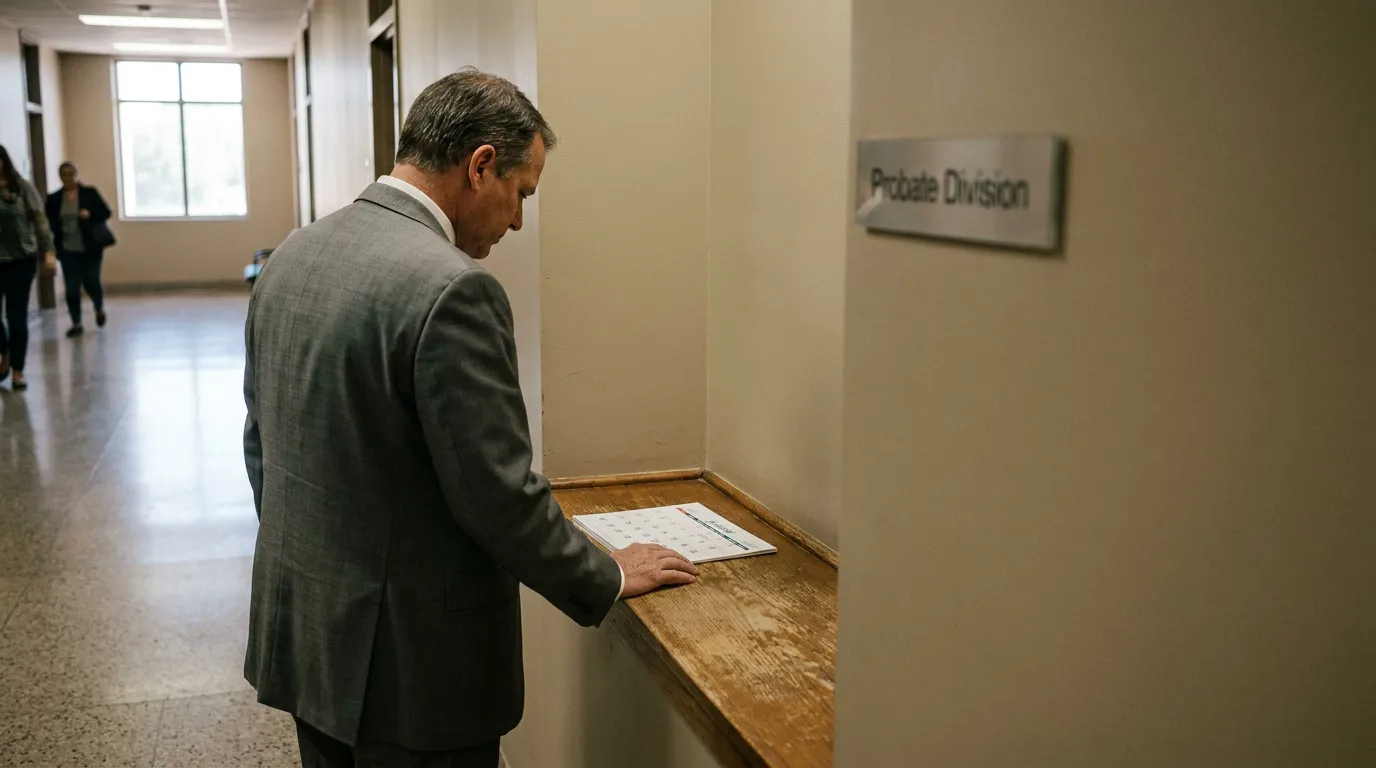
The four-month rule protects creditors, not delays grieving families. When a personal representative publishes notice to creditors, unknown creditors generally have four months from first publication to present claims, while known creditors given written notice generally have the later of that publication period or sixty days after mailed notice. Closing before this window runs would mean distributing assets potentially owed to someone else, exposing the personal representative to later disputes.
The statute ties the closing statement to completion of the claims period. Under A.R.S. § 14-3933(A)(1)-(3), the verified statement must confirm the creditor claims time limit has expired, the estate has been fully administered by addressing all claims, administration expenses, and death taxes (except as specified), and assets have been distributed with copies and full written accounting sent to distributees and known unpaid creditors. You cannot truthfully make these representations before the creditor claim period runs.
In practice, the four-month period doubles as a verification checkpoint. Rushing the filing may result in sworn statements that don’t hold up, a problem when the representative signs their name to it. Courts may consider verification accuracy if questions arise later, so timing and truthfulness requirements work together.
What "Fully Administered" Really Requires
Fully administered means more than paying the funeral bill and splitting a bank account. Presented claims must be paid, settled, or disposed of, administration expenses paid, and applicable estate or death taxes addressed before distribution, except where the closing statement specifies otherwise. Estate transfers are documented through supporting paperwork such as an Instrument or Deed of Distribution (PBIPF51f) and Inventory and Appraisement (PBIP46f).
Personal representatives carry obligations predating closing. Authority flows from Letters of Appointment (PBIP17f), and duties are spelled out in the Order to Personal Representative and Acknowledgment (PBIP18f). The closing statement confirms these duties were carried out.
How the Probate Closing Statement Arizona Process Fits the Broader Timeline
A probate closing statement Arizona filing sits at the end of a sequence typically beginning with informal probate application. Under A.R.S. § 14-3301(B), applications must be verified as accurate and complete, establishing the personal representative who eventually signs the closing statement months later.
Informal probate carries its own front-end limit. A.R.S. § 14-3301(B)(1)(f) requires stating that two years or less have passed since death, or that circumstances permitting tardy probate under A.R.S. § 14-3108 occurred. Families waiting years may find the informal path no longer available.
Gilbert residents file in Maricopa County Superior Court. Its Law Library Resource Center publishes official probate forms covering small estate transfers, informal proceedings, guardianship, and conservatorship. The informal probate section offers an "Appointment through Closing Steps" packet spanning the full case lifecycle.
💡 Pro Tip: The court states forms are under continual revision and assumes no responsibility for user actions. Verify you’re using the current version before filing, especially closing paperwork.
The One Real Exception: Small Estates Under Summary Administration
Not every estate waits four months. For estates qualifying for Arizona’s summary procedures in A.R.S. § 14-3973, A.R.S. § 14-3974(A) permits filing a verified closing statement any time after disbursement and distribution, unless prohibited by court order and except for supervised estates. This is a genuine exception.
The tradeoff is the estate must qualify, and the statement confirms this under oath. A.R.S. § 14-3974(A)(1)-(3) requires confirming the entire estate value, less liens and encumbrances, didn’t exceed allowances (homestead, exempt property, family allowance, administration costs, funeral expenses, and last illness medical expenses); the estate was fully administered by disbursing to entitled persons; and copies with written accounting were sent to distributees and known unpaid creditors. This is a comparison against allowances and expenses rather than a fixed dollar figure, making it fact-dependent.
| Situation | Earliest Filing | Governing Statute |
|---|---|---|
| Standard informal, unsupervised estate | 4 months after original appointment | A.R.S. § 14-3933(A) |
| Small estate under summary administration | Any time after disbursement and distribution | A.R.S. § 14-3974(A) |
| Supervised administration | Closing statement procedure does not apply | A.R.S. §§ 14-3933(A), 14-3974(A) |
What Happens After You File the Closing Statement
Filing doesn’t necessarily end your role immediately. Under A.R.S. § 14-3933(B), if no proceedings involving the personal representative are pending one year after filing, the appointment generally terminates. The same one-year rule applies to small-estate filings under A.R.S. § 14-3974(B)-(C).
That one-year tail is often missed. Termination ends authority to act but isn’t itself a discharge from liability, separate limitation rules govern claims against personal representatives. You may still receive questions, correspondence, or claims follow-up. Keeping organized records through this window is wise, and having accessible attorney support months later makes a meaningful difference.
Common Timing Mistakes We See
- Counting four months from death date instead of appointment date
- Assuming publication notice and appointment date are the same trigger
- Distributing before addressing all expenses and death taxes
- Filing outdated form versions
- Treating small-estate exception as available without confirming the value threshold
Each can result in rejected filings or distributions requiring unwinding. None are difficult to avoid with advance review. If you’re unsure which category applies, ask early rather than after submitting paperwork.
Why the Four-Month Number Shows Up More Than Once in Arizona Probate
Arizona probate uses four-month periods in multiple contexts, and confusing them is easy. The four-month period after appointment before filing differs from the four-month creditor publication period (running from first publication) and other beneficiary deadlines. If researching the 4-month will contest window in Arizona, that’s a distinct timeline serving a different purpose.
Beneficiaries sometimes receive closing statements and accounting without understanding their meaning. This generally means the personal representative believes administration is complete. If the accounting seems incorrect, an arizona probate deadlines lawyer can explain options and time limits.
Getting the Timing Right Without Guessing
Most personal representatives are family members handling this once. Walk-in Wills works with clients in Gilbert and throughout Mesa, Chandler, and Queen Creek, serving clients anywhere in Arizona through our fully online process. We offer flat-fee transparent pricing, roughly one-week document turnaround, on-site notaries and witnesses, and same-day, emergency, and mobile services including home and hospital visits and Saturday appointments by arrangement.
Frequently Asked Questions
1. When can an estate close in Arizona if I was appointed in January?
Under A.R.S. § 14-3933(A), the earliest filing is generally four months after appointment, assuming the estate is unsupervised, the court hasn’t ordered otherwise, and administration is complete. Meeting the four-month mark alone isn’t enough if the creditor claim period hasn’t expired. Qualifying small estates under A.R.S. § 14-3974(A) may file sooner.
2. Does the four-month waiting period start at death or at appointment?
The statutory language ties the period to the original appointment date, not death. This is a common confusion point in the Gilbert probate timeline.
3. What must the closing statement actually say?
A.R.S. § 14-3933(A)(1)-(3) requires verified statements that the creditor claims time limit expired, the estate is fully administered with claims, expenses, and taxes resolved (except as specified) and assets distributed, and that copies and full accounting were sent to distributees and known unpaid creditors.
4. Am I released from liability once I file?
Generally not immediately. Under A.R.S. § 14-3933(B), appointment generally terminates if no proceedings involving you are pending one year after filing. Termination isn’t a court discharge or blanket release, and claims may still be pursued within applicable limitation periods.
5. Can I still use informal probate if the death was three years ago?
Generally no, unless circumstances authorizing tardy probate under A.R.S. § 14-3108 apply. A.R.S. § 14-3301(B)(1)(f) limits informal probate to cases where two years or less have passed, subject to narrow exceptions courts read carefully.
Closing an Estate Correctly the First Time
The four-month rule in A.R.S. § 14-3933(A) isn’t bureaucratic friction. It gives creditors a defined window, protects representatives from premature distribution, and supports accuracy of sworn closing statement representations. Small estates under summary procedures have a real exception under A.R.S. § 14-3974(A), but qualifying depends on numbers and facts. Whether following the standard timeline or summary path, the goal is the same: file once, file accurately, close cleanly.
If you’re administering a loved one’s estate, you don’t have to figure out the calendar alone. Reach out to Walk-in Wills for guidance built around your actual situation, call (480) 470-7000, or get in touch with our team to talk through your next step.
Disclaimer: This content is for informational purposes only and is not legal advice. Every case is unique, and results may vary. Consult an attorney about your specific circumstances.