
What Arizona’s Initialing Rule Means for Your Mental Health Care Plan
Key Takeaways: Arizona makes you initial separately to allow psychiatric hospitalization because inpatient admission limits your freedom more than most medical decisions, and your initials show you chose to grant that power on purpose. Under A.R.S. § 36-3283(F), your agent can generally consent to inpatient psychiatric admission only if your document expressly grants that authority. Under A.R.S. § 36-3282(B), you must also initial each paragraph that grants that authority when the document is signed and witnessed, and your signature at the end generally does not count. A valid mental health care power of attorney also requires that you are not incapable when you sign. It must be written, dated, and clearly show your intent. It must also be notarized or witnessed by at least one adult, and neither the notary nor the witness can be your agent or a provider directly involved in your care. If only one witness signs, that person cannot be a relative or an heir, and extra steps apply if you cannot physically sign. Getting these details right before a crisis can help protect your choices and give your family clear authority when they need it.
Arizona makes you initial separately because agreeing to psychiatric hospitalization is a serious decision, and the law wants proof that you made it on purpose. Under A.R.S. § 36-3282(B), if your mental health care power of attorney lets your agent admit you to a licensed inpatient psychiatric facility, you must initial each paragraph that grants that authority. You add those initials when the document is signed and witnessed. Your signature at the end generally does not meet this rule. If you miss this step, the authority you meant to give your agent may fail when your family needs it most.
If you are planning for a possible mental health crisis, get this detail right before anything happens. Walk-in Wills helps families build incapacity plans that reflect what they want and are signed correctly. Call 480-605-7000 or contact us now to talk with a local attorney about your options.
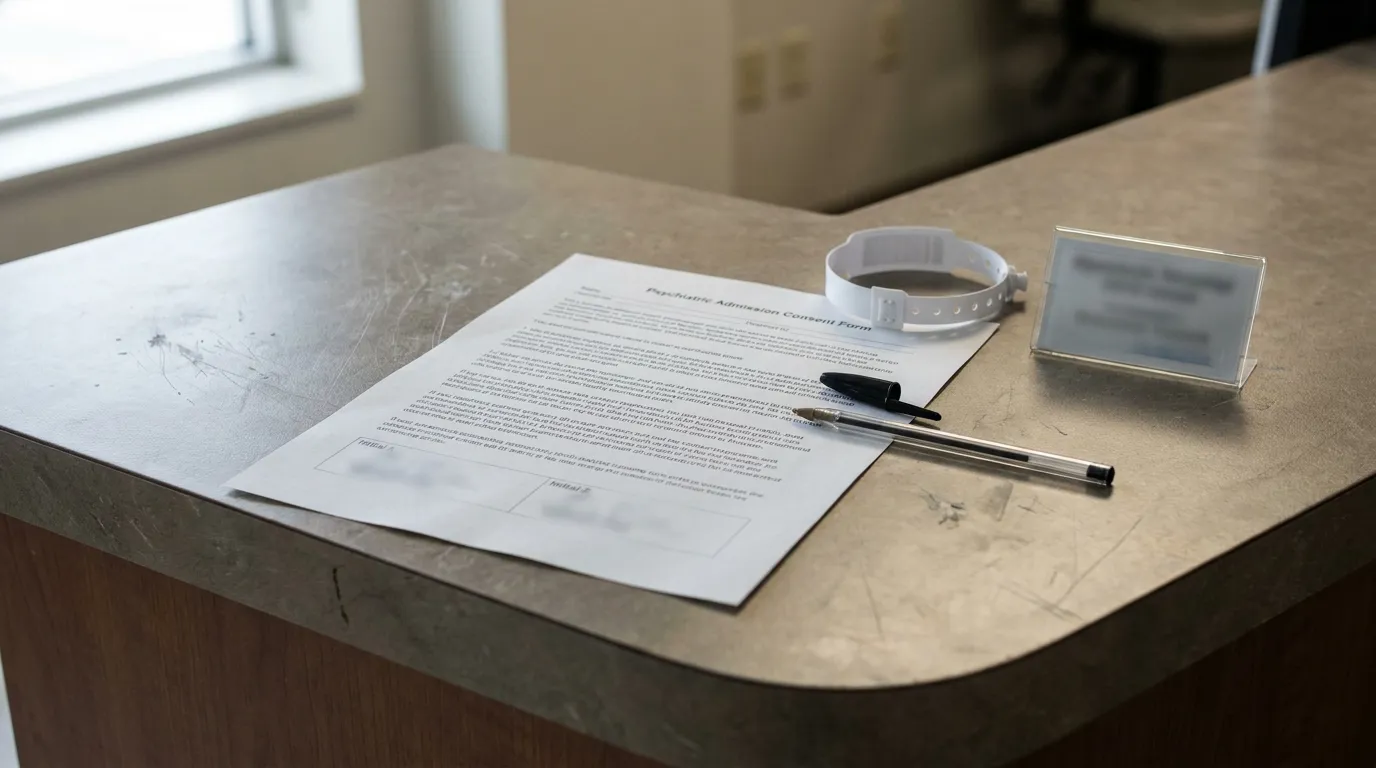
The Scenario: A Parent Planning Ahead After a Diagnosis
Here is a common situation. A Mesa mother with bipolar disorder is stable today, but she has been hospitalized before. She wants her adult son to be able to get her into inpatient care quickly if she has a severe episode and cannot decide for herself.
A mental health care power of attorney is the tool she would generally use. Without one, her son may have limited authority to consent to inpatient psychiatric care, and her family could face delays during a crisis. With a properly signed document, she chooses ahead of time who decides and what that person may do. Her son’s authority generally applies only when she cannot make her own decisions. The plan only works if the document meets Arizona’s signing rules, including the initialing rule.
Why General Authority Is Not Enough
Arizona does not treat inpatient psychiatric authority as part of general decision-making power. Under A.R.S. § 36-3283(F), an agent may consent to admit the principal to a licensed inpatient psychiatric facility only if the mental health care power of attorney, or a health care power of attorney under A.R.S. § 36-3221, expressly grants that authority. If the document leaves out that language, the agent generally does not have the power, no matter how broad the rest of the document is.
Express language alone is also not enough. A.R.S. § 36-3282 requires the principal to initial each paragraph that grants this authority when the document is signed and witnessed. One rule requires the right words, and the other requires your initials next to them.
Why the Rule Exists
The initialing rule is meant to protect your right to decide. Being admitted to a psychiatric facility limits your freedom in a way most medical decisions do not. Initialing each paragraph shows that you knowingly chose to give that authority. It can make it harder for anyone to claim later that the power was hidden in fine print.
Building a Valid Mental Health Power of Attorney Arizona Families Can Rely On
A valid document must meet several basic requirements before the initialing rule even matters. Under A.R.S. § 36-3282(A)(1)-(4), the principal must not be incapable when signing. The document must be in writing, clearly show an intent to create a mental health care power of attorney, and be dated and signed or marked by the principal.
The document also needs proper witnessing or notarization. Under A.R.S. § 36-3282(A)(5), it must be notarized or witnessed in writing by at least one adult. The notary or witness must affirm that they were present when the principal dated and signed or marked the document, and that the principal appeared to be of sound mind and free from pressure.
Who Cannot Serve as a Witness or Notary
Arizona limits who can confirm your signature. Under A.R.S. § 36-3282(D)(1)-(2), the notary or witness cannot be:
- A person named in the document to make medical decisions for the principal
- A professional care provider directly involved in the principal’s care at the time of signing
- If only one witness signs, a person related to the principal by blood, marriage, or adoption, under A.R.S. § 36-3282(E)(1)
- If only one witness signs, a person entitled to any part of the principal’s estate by will or by law, under A.R.S. § 36-3282(E)(2)
Families often run into these limits. The son in our example could not witness or notarize his mother’s document because he is her named agent. Her therapist also could not, as long as the therapist is directly involved in her care when she signs. The table below sums up the key requirements.
| Requirement | What Arizona Generally Requires | Statute |
|---|---|---|
| Capacity | Principal is not incapable at signing | A.R.S. § 36-3282(A)(1) |
| Form | Written, dated, signed or marked, clear intent | A.R.S. § 36-3282(A)(2)-(4) |
| Verification | Notary or at least one adult witness | A.R.S. § 36-3282(A)(5) |
| Inpatient authority | Express language in the document | A.R.S. § 36-3283(F) |
| Initialing | Each paragraph granting inpatient authority, initialed at signing | A.R.S. § 36-3282(B) |
| Single witness | Not a relative or an heir | A.R.S. § 36-3282(E)(1)-(2) |
💡 Pro Tip: Initial the inpatient paragraphs in front of your witness or notary during the signing. Initials added later may not meet the statute’s timing rule.
Special Situations That Change the Signing Process
Physical limits do not necessarily stop someone from creating a valid document, but they add steps. Under A.R.S. § 36-3282(C), if the principal cannot physically sign or mark the document, the notary or each witness must confirm on the document that the principal directly indicated it expresses their wishes and that the principal intends to adopt it at that time.
You can also choose how this document fits into the rest of your plan. Under A.R.S. § 36-3282(F), a mental health care power of attorney can be part of a general health care power of attorney or a separate document. Some clients prefer one combined document. Others keep the mental health terms separate so they can update them on their own. Many families pair this planning with a broader psychiatric advance directive and other health care documents.
Common Mistakes That Weaken Inpatient Authority
The most common problem is a signature without initials. If the inpatient paragraphs are not initialed, the agent’s power to consent to psychiatric hospitalization may fail exactly when the family needs it. Other mistakes include choosing a witness who is not allowed, leaving out the express grant, and signing when the principal’s capacity could be questioned.
These problems may not show up until a crisis. A hospital or facility will generally review the document before relying on it. If the paperwork has a flaw, the family may have to look for other legal options under stress, such as Arizona’s court-ordered evaluation process.
How a Mental Health Care POA Fits Into a Complete Estate Plan
Incapacity planning works best when it matches the rest of your plan. An Arizona mental health POA covers treatment decisions during your lifetime if you become incapable, while your will and other estate documents handle what happens to your property. Reviewing them together can help prevent conflicts between agents and gaps in authority.
A local estate planning attorney Mesa families trust can review your situation in a relaxed, plain-English conversation. At Walk-in Wills, we work with clients in person and fully online. We also serve Chandler, Gilbert, and Queen Creek, and we offer online services throughout Arizona. Our office has on-site notaries and witnesses, which can help you avoid the witness problems described above.
💡 Pro Tip: Give your agent a copy of the signed document, and talk with them about what you would want in a crisis. Your agent can only act on wishes they understand.
Frequently Asked Questions
1. Does my signature at the end cover the inpatient psychiatric paragraphs?
Generally, no. Under A.R.S. § 36-3282(B), you must separately initial each paragraph that grants inpatient psychiatric authority when you sign and the document is witnessed.
2. Can my agent admit me to a psychiatric facility without express language?
Generally, no. Under A.R.S. § 36-3283(F), an agent may consent to inpatient psychiatric admission only if the document expressly grants that authority.
3. Can my spouse witness my mental health care power of attorney?
If your spouse is also your named agent, they cannot serve as a witness under A.R.S. § 36-3282(D)(1). If only one person witnesses the document, that person also cannot be related to you by blood, marriage, or adoption under A.R.S. § 36-3282(E)(1). In practice, a spouse generally should not be your only witness.
4. Do I need a separate document for mental health decisions?
Not necessarily. Under A.R.S. § 36-3282(F), a mental health care power of attorney can be part of a general health care power of attorney or a separate document. The better choice depends on your goals and family situation.
5. What if I cannot physically sign?
You may still create a valid document. Under A.R.S. § 36-3282(C), the notary or each witness must confirm on the document that you directly indicated it expresses your wishes and that you intend to adopt it at that time.
Protecting Your Choices Before a Crisis
Arizona’s initialing rule exists so that the decision to allow psychiatric hospitalization stays yours. A mental health power of attorney that Arizona courts and facilities are more likely to rely on generally needs express inpatient language, separate initials on each paragraph granting that authority, eligible witnesses or a notary, and a principal who is not incapable at signing.
Walk-in Wills offers a free one-hour consultation for new estate-planning matters. Talk with a local attorney at Walk-in Wills about creating a mental health care power of attorney that fits the rest of your plan. Call our Mesa office at (480) 605-7000 or schedule your consultation today.
Disclaimer: This content is for informational purposes only and is not legal advice. Every case is unique, and results may vary. Consult an attorney about your specific circumstances.