
Married After the Will Was Signed? Arizona Law May Still Protect You
Key Takeaways: A pretermitted or omitted spouse under Arizona law married the testator after the will was executed. A.R.S. § 14-2301 may entitle that spouse to an intestate share calculated on the portion of the estate not devised to the testator’s children born before the marriage who are not the surviving spouse’s children, or to those children’s descendants. Exceptions under § 14-2301(A)(1), (2) can defeat the claim if the will was made in contemplation of the marriage or states it survives a later marriage. Rights can be waived under § 14-2207. Funding follows a statutory order: devises to the spouse apply first, then other devises may abate under § 14-3902, with gifts to pre-marriage children generally protected.
If you married someone in Gilbert after they signed a will that omits you, Arizona law generally does not leave you empty-handed. Under A.R.S. § 14-2301, titled "Entitlement of spouse; premarital will," a surviving spouse who married the testator after will execution may be entitled to an intestate share of the qualifying estate portion. This is the pretermitted spouse doctrine, involving exceptions, funding rules, and calculation methods during probate.
The most useful step is a conversation with an attorney who can review the actual will and marriage timeline. Walk-in Wills helps Arizona families understand how a premarital will may affect a surviving spouse and what a properly updated plan should look like. Call (480) 470-7000 or reach out to our team to discuss your situation.
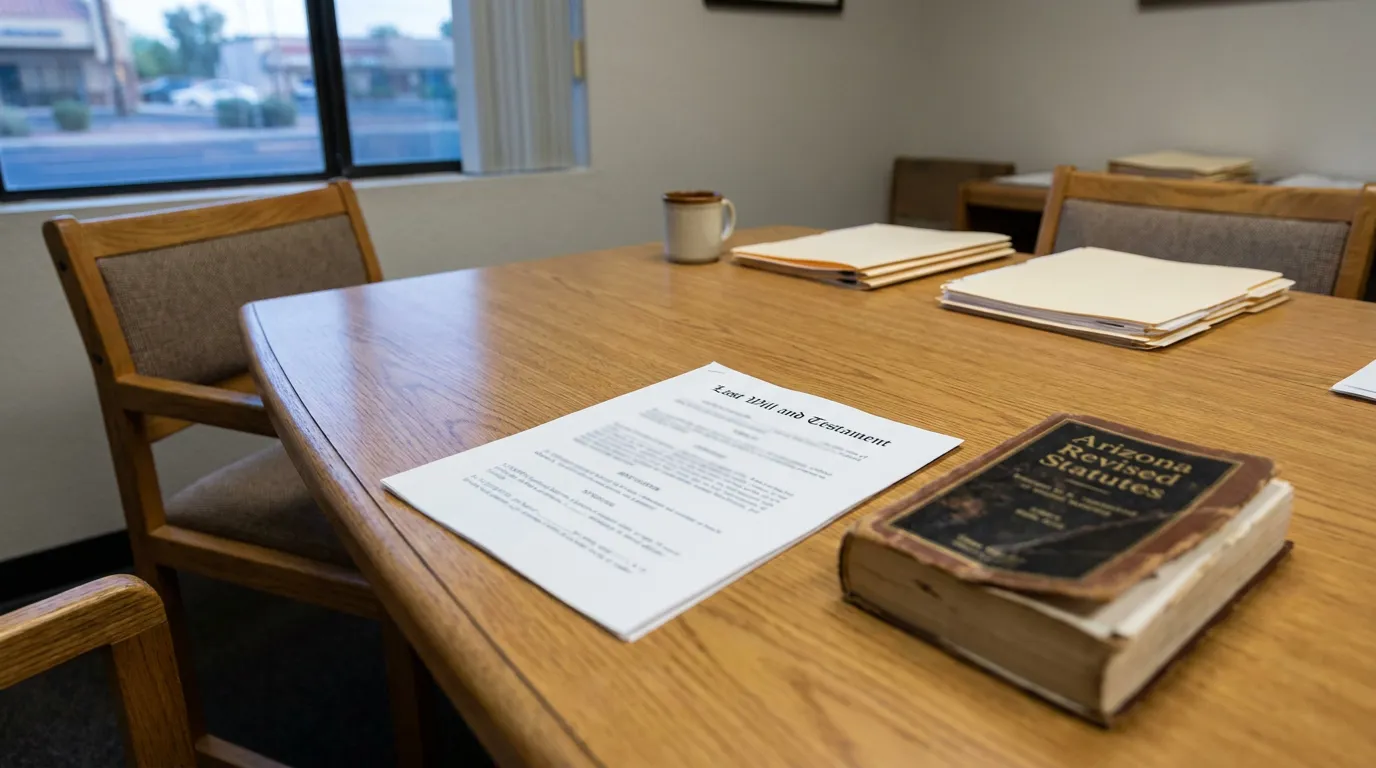
What the Omitted Spouse Definition Actually Means
A pretermitted spouse, also called an omitted spouse, is a surviving spouse who married the testator after the testator executed the will. Because the will predates the marriage, it may make no provision for the new spouse, and Arizona’s probate code provides a statutory remedy rather than assuming disinheritance. The doctrine lives in Title 14, Chapter 2, Article 3, titled "Spouse and Children Unprovided for in Will."
The title "Premarital will" signals the doctrine targets wills signed before the wedding, catching many second and later-in-life marriages by surprise. If the will was signed after the marriage and simply omits the spouse, that is generally a different legal question.
Why the Timeline Is the First Thing to Check
Before anything else, pin down two dates: when the will was executed and when the marriage occurred. If the marriage came second, § 14-2301 may apply. If the will came second, this statutory analysis generally does not apply.
How the Intestate Share Is Calculated for a Surviving Spouse in Arizona
The omitted spouse’s entitlement is measured by the intestate share, but may not reach every asset. Under A.R.S. § 14-2301, the share is calculated on the portion of the estate not devised to a child of the testator who was born before the testator married the surviving spouse and who is not the surviving spouse’s child, or devised to that child’s descendant. Property passing to such a child or descendant under A.R.S. §§ 14-2603 or 14-2604 may also be carved out. The intestate share itself is determined under Arizona’s intestacy rules in § 14-2102, which can range from the entire qualifying portion to a partial share depending on surviving descendants.
The Legislature protected gifts to the testator’s children from a prior relationship, meaning the share varies with family structure. In a blended Gilbert family with adult children from a first marriage, the protected portion may be substantial.
| Scenario | General Effect on the Share |
|---|---|
| Will signed before the marriage, no children from a prior relationship | Intestate share generally calculated on the full probate estate |
| Will signed before the marriage, devises to pre-marriage children | Those devises are generally excluded from the calculation |
| Will made in contemplation of the marriage | Claim may be defeated under § 14-2301(A)(1) |
| Will states it survives a later marriage | Claim may be defeated under § 14-2301(A)(2) |
Outcomes depend heavily on the will’s specific language and assets involved.
Exceptions That Can Defeat a Pretermitted Spouse Arizona Will Claim
Arizona law recognizes exceptions under § 14-2301(A)(1) and (2), and courts examine the will’s language and surrounding evidence. The claim may be defeated if the will or other evidence shows it was made in contemplation of the testator’s marriage to the surviving spouse, or if the will expresses the intention that it is effective notwithstanding any subsequent marriage.
These exceptions are fact-sensitive. A single sentence can change the entire analysis. Separately, spousal rights can be waived under A.R.S. § 14-2207, so a prenuptial or postnuptial agreement may also be relevant.
What Courts May Consider
- The exact wording of the will and any reference to an anticipated marriage
- Whether the testator made non-probate transfers to the spouse, such as beneficiary designations
- Whether a valid waiver of spousal rights exists
- The identity of the devisees and whether they are pre-marriage children of the testator
How the Share Gets Funded During Maricopa County Probate
Funding the omitted spouse’s share follows a statutory order. Under § 14-2301(B), any devises made by the will to the surviving spouse are applied first. Other devises may then abate pursuant to A.R.S. § 14-3902, with the important exception that devises to the testator’s pre-marriage children who are not the surviving spouse’s children, devises to those children’s descendants, and property passing to them under §§ 14-2603 or 14-2604, are generally protected from abatement.
Under Arizona’s abatement rules, heirs and devisees take subject to creditor claims, statutory allowances of the surviving spouse and dependent children, and to abatement, retainer, advancement and ademption. Article 4 allowances, including the homestead allowance under § 14-2402, exempt property under § 14-2403, and the family allowance under § 14-2404, may also apply.
💡 Pro Tip: Gather the original will, the marriage certificate, and any beneficiary designations early. Those three documents answer most threshold questions a lawyer will ask.
What the Personal Representative Is Required to Do
A personal representative in Gilbert or elsewhere in Maricopa County probate cannot simply follow the will’s text and ignore a surviving spouse. Under A.R.S. § 14-3703, the personal representative must administer and distribute the estate in accordance with the rights of claimants, the surviving spouse, minor children, dependent children, and any pretermitted child of the decedent as described elsewhere in Title 14.
Personal representatives are often family members unfamiliar with estate administration and may not know the omitted spouse rule exists, which is why these issues can surface late in administration.
When Questions Go Beyond the Omitted Spouse Rule
Sometimes the concern is not the will’s timeline but the circumstances under which it was signed. If you believe there were capacity, undue influence, or execution problems, that is a separate analysis. Our overview of who can contest a will walks through that threshold question in Arizona terms.
For matters involving challenging a document rather than applying the omitted spouse statute, a pretermitted spouse arizona will lawyer can explain how those claims differ and what deadlines may apply. Probate deadlines can be short and are strictly applied.
The Practical Fix: Update the Plan Before It Becomes a Probate Question
Pretermitted spouse issues trace back to a will never updated after a wedding. The statute may serve as a safety net, but it is not a substitute for a plan reflecting your actual intentions. Relying on a default share may mean your family inherits a calculation rather than your wishes.
Sitting down with a licensed Arizona attorney after a marriage lets you confirm the will, beneficiary designations, and agreements all align. Walk-in Wills works with clients in Gilbert, Mesa, Chandler, and Queen Creek, and serves clients throughout Arizona online. New estate-planning matters include a one-hour free consultation, and documents are typically completed in about a week with flat-fee, transparent pricing.
💡 Pro Tip: Beneficiary designations on retirement accounts and life insurance pass outside the will. Updating a will without reviewing those forms often leaves a gap.
Frequently Asked Questions
1. Does the pretermitted spouse rule apply if we married before the will was signed?
Generally no. A.R.S. § 14-2301 addresses a premarital will, meaning a will executed before the marriage. A will signed during marriage that omits a spouse raises different legal questions.
2. Can a prenuptial agreement eliminate an omitted spouse’s claim?
It may. A.R.S. § 14-2207 governs surviving spouse rights and waiver requirements and effect. Whether a particular agreement is enforceable depends on its terms and execution.
3. Are my stepchildren’s inheritances protected from the omitted spouse share?
Devises to the testator’s children born before the marriage who are not the surviving spouse’s children are generally excluded from the calculation and protected from abatement under § 14-2301(B).
4. What if my spouse gave me assets outside the will instead?
Arizona’s § 14-2301(A) recognizes two exceptions that may defeat a pretermitted spouse claim: the will was made in contemplation of the marriage, or the will expresses that it is effective notwithstanding any subsequent marriage. Whether non-probate transfers affect your claim depends on the specific facts and applicable exceptions.
5. Do I need to raise this during probate, or does it happen automatically?
A personal representative has statutory duties toward a surviving spouse, but relying on that alone may be risky. Raising the issue promptly with counsel is generally safer.
Where This Leaves a Surviving Spouse in Gilbert
Arizona’s omitted spouse rule may give a surviving spouse a meaningful floor when a will predates the marriage, but it is not unconditional. The share is measured by the intestate portion, reduced by devises to the testator’s pre-marriage children who are not the spouse’s children, and subject to exceptions for wills made in contemplation of marriage and wills expressly surviving a later marriage. Funding follows a defined order, and the personal representative carries statutory duties that may reach beyond the document.
If you married after your spouse signed a will, or you signed a will before your own marriage, this is worth a real conversation. Walk-in Wills offers unhurried, plain-English guidance in person or fully online, with notaries and witnesses available so documents are executed correctly the first time, and an attorney who is still reachable when a question comes up weeks later. Call (480) 470-7000 or schedule your consultation today.
Disclaimer: This content is for informational purposes only and is not legal advice. Every case is unique, and results may vary. Consult an attorney about your specific circumstances.