
Who Can Actually Contest a Will in Gilbert, AZ?
Key Takeaways: In Arizona, only "interested persons" with a direct financial stake in the estate have standing to contest a will. This includes heirs, devisees, beneficiaries named in prior wills, creditors, and certain fiduciaries. Arizona law under ARS § 14-2712 presumes the will-maker had capacity and acted free from undue influence, placing the burden of proof on the challenger. Deadlines are strict and can permanently bar your claim.
If you believe a loved one’s will does not reflect their true wishes, the first question is whether you have legal standing to challenge it. In Gilbert, Arizona, not just anyone can contest a will. Arizona law limits that right to "interested persons", individuals who stand to gain or lose financially depending on whether the will is upheld or invalidated. If you are an heir who was unexpectedly disinherited, a beneficiary under a prior will, or a personal representative, you may have grounds to proceed. However, you also need a legally recognized basis such as lack of capacity, undue influence, fraud, duress, or improper execution.
If you suspect something is wrong with a will affecting your inheritance, Walk-in Wills can help you evaluate your options. Call (480) 470-7000 or reach out to our team today to discuss your situation.
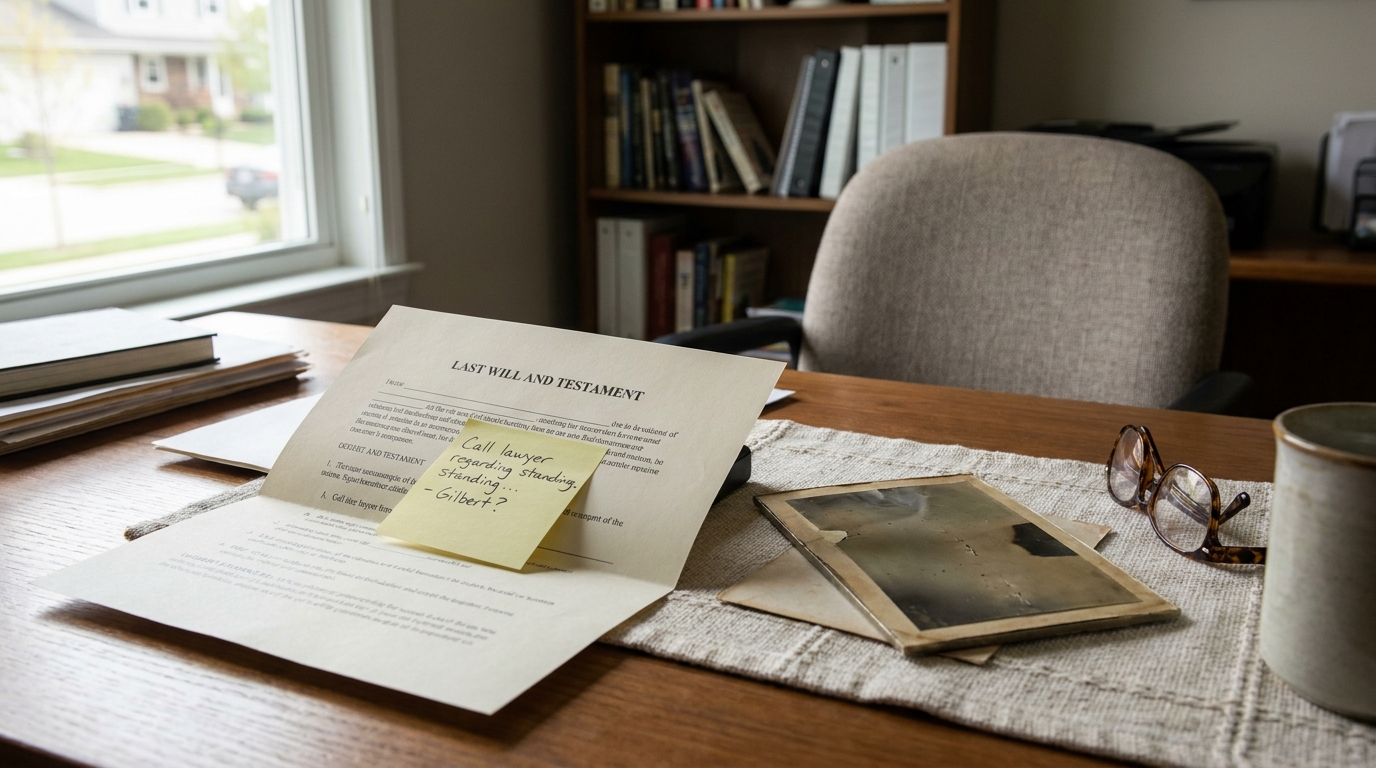
What Does "Standing" Mean in an Arizona Will Contest?
Standing is the legal right to bring a claim before the court; without it, a judge will dismiss your case before reaching the merits. Under ARS § 14-1201, an "interested person" includes trustees, heirs, devisees, children, spouses, creditors, beneficiaries, persons holding a power of appointment, and others with a property right in or claim against the estate. The definition extends to persons with priority for appointment as personal representative and fiduciaries representing interested persons. The key factor is direct financial interest. A friend who disagrees with asset distribution generally lacks standing unless they were named in a prior will or hold a valid claim.
Courts apply this requirement strictly. If you are not in line to inherit under intestacy laws and are not named in any testamentary documents, your path to contesting is narrow. Identifying your legal relationship to the decedent and estate is the critical first step.
💡 Pro Tip: Gather every version of the will and any trust amendments. Prior versions may establish you were a beneficiary before suspicious changes occurred.
Grounds for Contesting a Will: What Arizona Law Requires
Arizona does not allow you to contest a will simply because the distribution seems unfair. You must assert legally recognized grounds. The most common bases include:
- Lack of testamentary capacity: The will-maker did not understand the nature of their assets, their natural heirs, or what executing a will meant.
- Undue influence: Someone in a position of trust manipulated the will-maker into changing their estate plan.
- Fraud or forgery: The will-maker was deceived about the document’s contents, or the signature is not authentic.
- Duress: The will-maker signed under threat or coercion.
- Failure of execution formalities: The will was not signed or witnessed per Arizona statutory requirements.
Arizona law presumes the will’s validity. Under ARS § 14-2712(B), a person who executes a will is presumed to have had capacity and to have acted free from undue influence and duress. The challenger carries the burden of proof, while under ARS § 14-2712(A), the will’s proponent bears the initial burden of establishing due execution.
How the Burden of Proof Works in Arizona Will Contests
If you challenge a will in Arizona, you must prove your case by a preponderance of the evidence. Under ARS § 14-2712(D), you must show it is more likely than not that the will is invalid. This is lower than "beyond a reasonable doubt," but still requires credible, organized evidence.
An important exception can shift the burden in undue influence cases. Under ARS § 14-2712, a will is presumed to be the product of undue influence if a person with a confidential relationship was active in procuring the will’s execution and is also a principal beneficiary. The same presumption applies if the will preparer (or the preparer’s spouse, parents, or the issue of the preparer’s spouse or parents) is a principal beneficiary, unless the instrument was prepared for a grandparent of the preparer, the issue of a grandparent of the preparer, or the respective spouses or former spouses of persons related to the preparer. When the presumption applies, the beneficiary defending the will bears the burden to rebut it by a preponderance of the evidence; if the narrow family-relationship exception applies, the presumption does not arise and the challenger retains the burden of proof.
| Scenario | Who Bears the Burden? | Standard |
|---|---|---|
| General will contest | The challenger | Preponderance of the evidence |
| Confidential relationship + active procurement + principal beneficiary | The will’s proponent (defender) | Must rebut the presumption by a preponderance of the evidence |
| Will preparer (or preparer’s spouse/parents/issue of preparer’s spouse or parents) is principal beneficiary (absent the narrow grandparent/issue/spouses exception) | The will’s proponent (defender) | Must rebut the presumption by a preponderance of the evidence |
💡 Pro Tip: Document the relationship between the alleged influencer and decedent thoroughly. Medical records, financial transactions, and witness statements can establish confidential relationship and active procurement.
Where to File a Will Contest Serving Gilbert, Arizona
Gilbert falls within Maricopa County, so will contests are filed in the Maricopa County Superior Court. This court has jurisdiction over probate matters for Gilbert residents and surrounding communities like Mesa and Chandler. Queen Creek, however, spans both Maricopa and Pinal counties, so residents in the Pinal County portion of Queen Creek would file probate matters in the Pinal County Superior Court instead.
Arizona’s court system offers tools for self-represented filers, but will contests are high-stakes adversarial proceedings. The Arizona Judicial Branch Self-Service Center provides official forms and guidance. The court also provides a Demand for Notice form (PB19f), which allows you to formally assert your interest in a probate proceeding. Filing this form early protects your rights while you evaluate whether to bring a formal contest.
💡 Pro Tip: File a Demand for Notice as soon as you learn a probate case has opened. This ensures you receive updates on all proceedings and deadlines.
Steps to Protect Your Claim Early
Acting quickly after learning about a potentially invalid will can make or break your case. Arizona imposes strict procedural deadlines, and missing them may permanently waive your right to contest. Consider these steps:
- Request copies of the filed will and related petitions from the court.
- File a Demand for Notice (form PB19f) with Maricopa County Superior Court.
- Preserve evidence of the decedent’s mental state, communications with the alleged influencer, and prior estate planning documents.
- Consult with a probate attorney before the statutory window closes.
Understanding No-Contest Clauses
Some wills contain "no-contest" or "in terrorem" clauses designed to discourage challenges. These provisions state that any beneficiary who contests forfeits their inheritance. Under ARS § 14-2517, Arizona courts enforce these clauses, but they are unenforceable if the court finds the person had probable cause for bringing the contest. If you are currently a beneficiary considering a challenge, carefully weigh the risk of losing what you stand to receive.
💡 Pro Tip: If the will contains a no-contest clause, do not file anything before getting legal assessment. There may be ways to seek judicial guidance without triggering the clause.
What a Probate Attorney in Gilbert Can Do for Your Case
A probate attorney in Gilbert can evaluate your standing, identify viable grounds for contest, and help preserve critical evidence before deadlines pass. Estate litigation in Gilbert and Maricopa County often involves complex fact patterns, including elder abuse, caregiver manipulation, or last-minute document changes. Legal counsel who understands Arizona probate law and Maricopa County Superior Court procedures can significantly affect your case outcome.
Walk-in Wills offers same-day consultations and mobile services, including home and hospital visits, for clients needing timely guidance on heir rights in Gilbert, Arizona. Explore our will contest services page for more information.
Realistic Outcomes: What to Expect When You Contest a Will
Will contests in Arizona do not always go to trial and do not always result in complete invalidation. Many disputes resolve through negotiation or mediation with modified distributions. The court may invalidate only a specific provision rather than the entire will. The outcome depends on evidence strength, witness credibility, and whether the presumption of undue influence applies.
Be prepared for the emotional toll. Contesting a will often involves conflict with family members or other beneficiaries. However, if you have legitimate grounds and credible evidence, Arizona law provides a clear path to challenge a will that does not reflect your loved one’s true intent.
💡 Pro Tip: Keep a detailed timeline of events, including changes in the decedent’s health, living situation, or relationships before the will was signed. This often becomes the backbone of an undue influence claim.
Frequently Asked Questions
1. Who qualifies as an "interested person" for a will contest in Arizona?
An interested person under ARS § 14-1201 includes heirs, devisees, surviving spouses, children, creditors, beneficiaries, trustees, and anyone with a property right in or claim against the estate. If you would inherit under intestacy laws or were named in a prior will, you likely qualify.
2. How long do I have to contest a will in Arizona?
Arizona imposes specific deadlines for filing a will contest that vary depending on the probate proceeding type and when you received notice. Because these windows can be short, consult with a probate attorney immediately when you suspect a problem.
3. Can I contest a will if I am not a family member?
Yes, in certain cases. If you were named in a prior will, or if you are a creditor or fiduciary with a legitimate claim against the estate, you may have standing. Direct financial interest is required, not family relationship.
4. What happens if the will has a no-contest clause and I challenge it?
If you are a current beneficiary and the will includes a no-contest clause, challenging could forfeit your inheritance. However, under ARS § 14-2517, the clause is unenforceable if the court determines you had probable cause for the contest.
5. Does filing a Demand for Notice count as contesting the will?
No. Filing a Demand for Notice (form PB19f) ensures you are notified of all filings and proceedings. It does not constitute a legal challenge but preserves your ability to act within required deadlines. For more guidance on probate processes, visit our probate blog.
Protecting Your Inheritance Starts With Knowing Your Rights
Standing to contest a will in Gilbert, Arizona, depends on your financial relationship to the estate and whether you can identify a legally recognized ground for challenge. Arizona law presumes the will is valid, so you must present credible evidence of incapacity, undue influence, fraud, duress, or procedural defects. Acting early, preserving evidence, and understanding procedural requirements in Maricopa County Superior Court are essential to protecting your claim.
If you believe you have grounds to challenge a will, Walk-in Wills is ready to help. Call (480) 470-7000 or contact us now to schedule a consultation with a probate attorney serving Gilbert and the surrounding East Valley.