
Too Many Savings for Medicaid? How Albuquerque Families Can Respond
Key Takeaways: A pooled trust lets a person with a disability move savings above New Mexico’s $2,000 Medicaid asset limit into a separate sub-account inside a larger trust run by a nonprofit. If the trust qualifies, those funds generally stop counting toward eligibility. To qualify under 42 U.S.C. § 1396p(d)(4)(C) and POMS SI 01120.203, the trust must be set up and run by a nonprofit, keep a separate account for each beneficiary, exist for the beneficiary’s sole benefit, and include payback terms. The trustee can then pay for extra needs that Medicaid does not cover. This can help protect eligibility for nursing-facility care and for home and community-based services. New Mexico law also recognizes benefit-preserving trusts, and in some cases a trustee can move an existing trust’s assets into a special-needs trust (called decanting). The tradeoffs: the nonprofit trustee controls spending, any balance left at death may first repay Medicaid, the state may seek estate recovery, and transfers by people age 65 or older may trigger a penalty. A local trust attorney can help families compare options and check current program rules before any money moves.
A pooled trust can let a person with a disability keep money that would otherwise put them over New Mexico’s $2,000 Medicaid asset limit. The person moves extra savings into a separate sub-account held inside a larger trust that a nonprofit runs. If the trust meets federal rules, those funds generally do not count toward the Medicaid limit. The money can still pay for needs Medicaid does not cover, though paying for some things, such as food or shelter, can reduce SSI benefits. There is a tradeoff: when the beneficiary dies, any balance the trust does not keep may first go to repay the state for Medicaid benefits. This post follows one common Albuquerque case: an adult with a disability, or an aging parent who needs nursing-facility care, has $40,000 in savings and is about to be denied Medicaid because of it.
If this sounds like your family, you can talk with a local attorney before any money moves. Walk-in Wills helps Albuquerque families with trusts and disability planning, in person or fully online. Call (505) 903-7000 or contact us now to schedule a conversation.
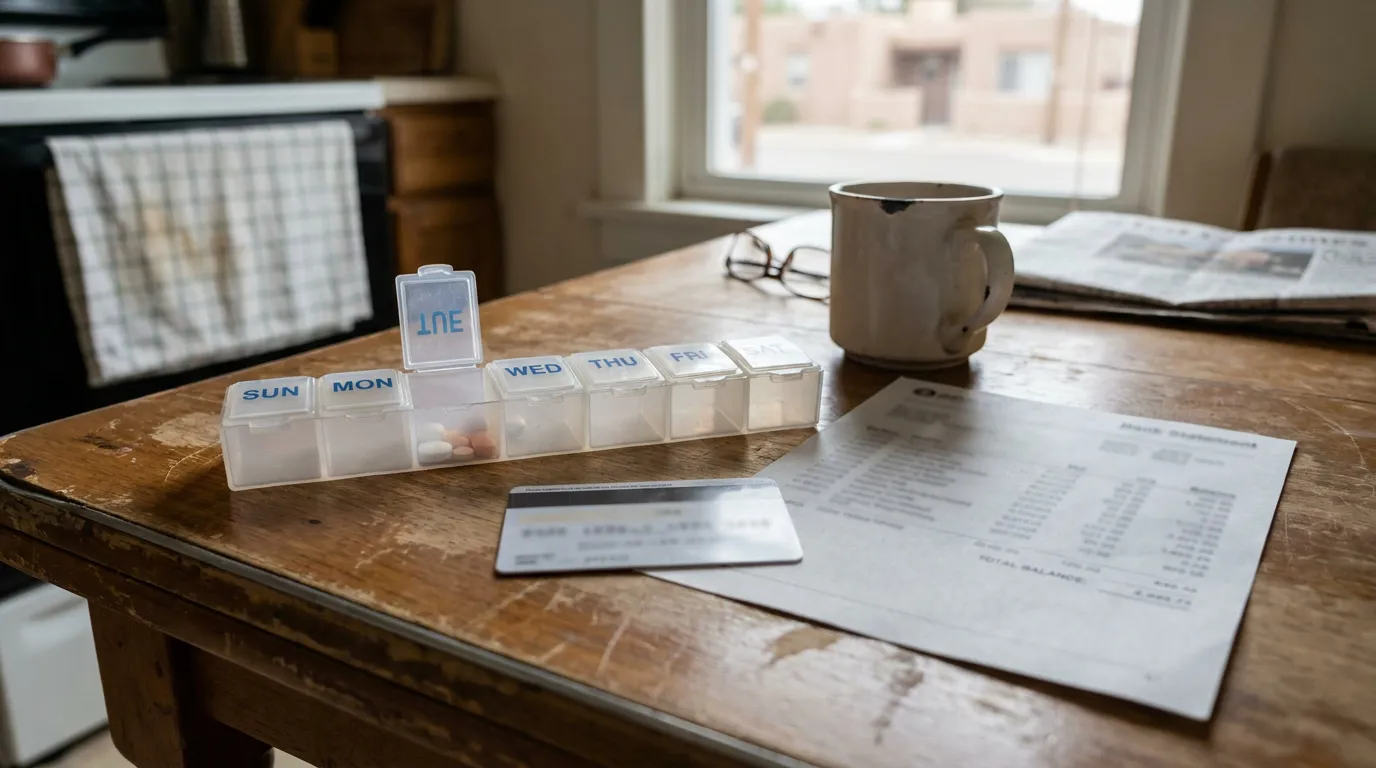
Why New Mexico Medicaid Counts Savings So Closely
For many aged, blind, and disabled people, New Mexico Medicaid eligibility follows federal Supplemental Security Income (SSI) rules, including the SSI asset test. Under NMSA 1978, Section 27-2B-15(A)(5), people who receive federal SSI are generally eligible for New Mexico Medicaid. A person whose countable assets exceed the SSI limit can lose SSI and, with it, this path to Medicaid.
The Nursing-Facility Problem
Long-term care raises the same issue. Under NMSA 1978, Section 27-2B-15(A)(6), an aged, blind, or disabled person living in an institution who meets every SSI standard except the income standard may qualify for Medicaid. Because the asset limit still applies, a person with too much in savings can be shut out of nursing-facility Medicaid even when their income qualifies.
Home Care Is Affected Too
The asset question also comes up for care at home. NMSA 1978, Section 27-2B-15(A)(7) extends eligibility to certain people who would qualify for institutional care but receive it at home. So pooled trust planning can matter for home and community-based services as well as nursing homes.
💡 Pro Tip: The $2,000 figure comes from federal SSI standards and New Mexico Health Care Authority rules, not from the state statutes above. These figures can change, so confirm the current 2026 New Mexico Medicaid standards for your program before you plan around any number.
How a Pooled Trust Holds Extra Savings
Federal law expressly allows pooled trusts. Under 42 U.S.C. § 1396p(d)(4)(C), a person with a disability can place assets in a trust set up and run by a nonprofit. If the trust meets the rules, those funds generally do not count toward the Medicaid limit, and SSI has a matching exception. The Social Security Administration explains this in its pooled trust exception guidance, POMS SI 01120.203. POMS is national SSI guidance, but New Mexico Medicaid also applies its own rules, so check how the state treats the trust.
What the Trust Must Include
A trust qualifies only if it meets several rules. Under POMS SI 01120.203, the trust generally must:
- Be set up and run by a nonprofit
- Keep a separate account for each beneficiary while pooling the funds for investment
- Be set up for the sole benefit of a person with a disability
- Include payback terms for money left in the account at the beneficiary’s death, to the extent the trust does not keep it
The separate sub-account is the key. The trust invests each beneficiary’s money together with others’ funds but tracks it separately. The trustee can pay for extra needs, such as certain therapies, equipment, or personal items, while the funds generally stay outside the beneficiary’s countable assets. Some payments may count as income for SSI.
A Local Option Families Often Explore
New Mexico residents have a state-based pooled trust. The Arc of New Mexico, a nonprofit serving New Mexicans with intellectual and developmental disabilities, runs a Master Trust program that helps people qualify for or keep Medicaid by placing extra assets in a trust account. Each program has its own enrollment terms, fees, and rules on keeping funds after death. Review those terms with a lawyer before you sign a joinder (enrollment) agreement.
How New Mexico Trust Law Supports This Planning
New Mexico law recognizes trusts that preserve benefits. NMSA 1978, Section 46-12-113(A)(4), part of the Uniform Trust Decanting Act, defines a "special-needs trust" as a trust that the trustee believes would not count as a resource when deciding whether a beneficiary with a disability qualifies for government benefits. Section 46-12-113(A)(2) defines "governmental benefits" broadly, and Medicaid generally fits. These decanting rules mostly concern trusts funded by others and existing trusts. They do not replace the federal rules for a pooled trust funded with the person’s own money.
Planning can begin before anyone applies. Section 46-12-113(A)(1) defines a "beneficiary with a disability" as someone the fiduciary believes may qualify for disability-based government benefits, so the person need not be getting benefits already. If you are comparing a pooled account with a stand-alone trust, our article on special needs planning covers related options.
Fixing an Older Trust That Threatens Eligibility
An existing family trust can sometimes be restructured. Under NMSA 1978, Section 46-12-113(A)(3) and (B), a special-needs fiduciary may use New Mexico’s decanting power to move assets into a special-needs trust. A special-needs fiduciary is a trustee or other fiduciary, other than the person who created the trust, who has discretion over principal or income, or who must distribute it. Whether decanting works depends on the trust’s terms, notice rules, and the family’s facts.
Weighing the Tradeoffs Before Funding the Account
A pooled trust solves an asset problem, but it has real costs. The table below compares the two paths in our $40,000 example.
| Issue | Keeping the $40,000 | Funding a Pooled Trust Sub-Account |
|---|---|---|
| Counted toward asset limit | Generally yes | Generally no, if rules are met |
| Who controls spending | The individual | The nonprofit trustee, under the trust terms |
| Use of funds | Any purpose | Sole benefit of the beneficiary |
| Balance at death | Passes through the estate, subject to possible estate recovery | May repay Medicaid first, or stay with the trust |
What Happens After Death
Families should understand repayment before they enroll. Under POMS SI 01120.203, money left at the beneficiary’s death generally must repay the state Medicaid program, to the extent the trust does not keep it. Separately, NMSA 1978, Section 27-2A-4(A)(1) requires New Mexico to seek recovery from the estate of a person who received Medicaid as a long-term nursing facility or institutional patient and was not reasonably expected to return home. Federal law also generally requires recovery for long-term care benefits paid at age 55 or older, with exceptions and hardship waivers.
💡 Pro Tip: Some program rules treat transfers into a pooled trust by people age 65 or older differently, which may trigger a transfer penalty. Bring the beneficiary’s age and the dates of any recent transfers to your consultation.
What Working With a Local Trust Attorney Looks Like
A local trust attorney can help you decide whether a pooled account, a stand-alone special-needs trust, decanting, or a mix fits your family. The talk usually covers the beneficiary’s current benefits, where the extra funds came from, likely care needs, and how it fits with the rest of the estate plan. A pooled trust lawyer can also review the nonprofit’s joinder agreement along with your wills and powers of attorney.
At Walk-in Wills, we take time with these conversations and explain things in plain English. We offer clear flat fees, documents often ready in about a week, and on-site notaries and witnesses for proper signing. We also make home and hospital visits when a loved one cannot travel.
Frequently Asked Questions
1. Can I put money into a pooled trust myself?
Generally, yes. Federal law allows a sub-account to be set up with the person’s own assets by the person, a parent, grandparent, legal guardian, or a court. Transfers made at age 65 or older may trigger a penalty.
2. Will a pooled trust protect all of my assets?
Not always. Only funds placed in a properly set up account are generally excluded, and other assets may still count.
3. Does a pooled trust help with in-home care?
It may. NMSA 1978, Section 27-2B-15(A)(7) covers certain people who meet institutional standards but receive care at home.
4. What happens to the money when the beneficiary dies?
Under POMS SI 01120.203, any balance the trust does not keep under its terms generally must repay the state Medicaid program.
5. Can an existing trust be changed to protect benefits?
In some cases, yes. NMSA 1978, Section 46-12-113 allows a special-needs fiduciary to decant assets into a special-needs trust, depending on the original trust’s terms.
Taking the Next Step
For a person with $40,000 in savings who faces a Medicaid denial, a pooled trust may offer a lawful way to keep eligibility while saving funds for extra needs. Federal law sets the trust rules, and New Mexico law recognizes trusts that preserve benefits. Repayment at death, estate recovery, and possible transfer penalties still matter. A plan that is drafted and funded correctly can protect both your savings and your benefits.
If you are deciding how to handle extra savings for yourself or a loved one, the next step is a conversation. Walk-in Wills offers a free one-hour consultation for new estate-planning matters. Call our Albuquerque office at (505) 903-7000 or visit our Albuquerque trust attorney page to get started.
Disclaimer: This content is for informational purposes only and is not legal advice. Every case is unique, and results may vary. Consult an attorney about your specific circumstances.