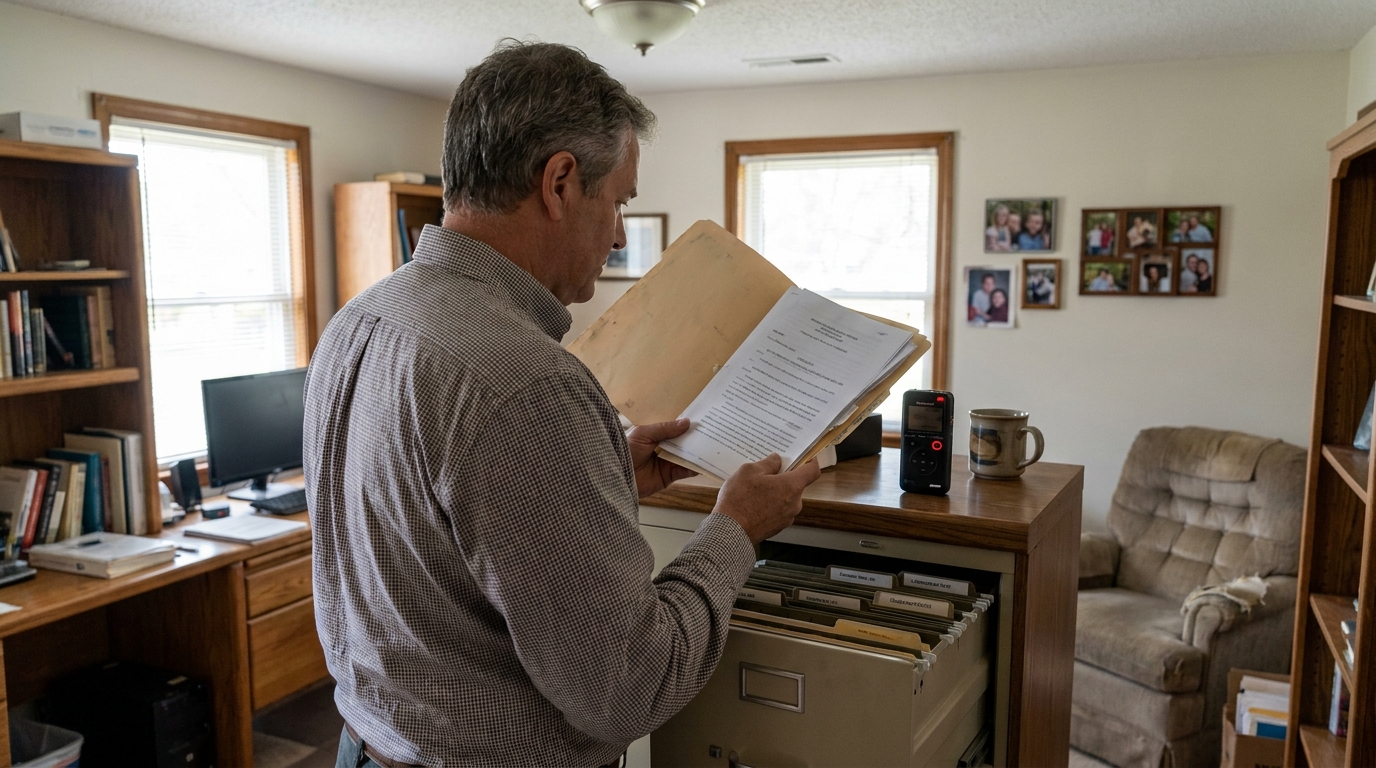
Protecting the Proof Behind an Arizona Will Contest
Key Takeaways: If you suspect a loved one’s will does not reflect their true wishes, preserve evidence quickly before documents are destroyed, witnesses disappear, or memories fade. In Arizona, wills can be challenged for lack of capacity, undue influence, fraud, duress, or missing formalities, each requiring different proof such as medical records, financial statements, and witness accounts. Strict deadlines apply, including the two-year limit under A.R.S. §14-3108, and burdens of proof shift depending on the issue. Contested matters require formal probate before a judge, making tailored legal work essential. Working early with a knowledgeable probate attorney in Gilbert gives you the strongest foundation for a potential challenge.
If you suspect a loved one’s will does not reflect their true wishes, the single most important step is to preserve evidence quickly before it disappears. Documents get shredded, witnesses move away, and memories fade. In Arizona, a will can be challenged on grounds such as lack of capacity, undue influence, fraud, duress, or missing formalities, and each depends on tangible proof. A will contest rises or falls on evidence gathered in the weeks and months after a death, which is why working with a knowledgeable probate attorney in gilbert early makes a meaningful difference.
If you believe you may have a claim, do not wait. The team at Walk-in Wills offers a free one-hour consultation. Call (480) 470-7000 or reach out through their secure contact page to discuss your situation before critical deadlines pass.
Why Evidence Disappears Fast in Probate Matters
Evidence in a will dispute is fragile, and the clock starts running the moment a person passes away. Bank records, medical charts, emails, text messages, and the original will can be lost, deleted, or destroyed if no one moves to secure them. Often, the people closest to the decedent during their final months control access to these materials, creating real risk that key proof never surfaces.
Arizona law imposes timing pressure. There is generally a two-year time limit for commencing proceedings to probate a will under A.R.S. §14-3108, with limited exceptions. Because procedural windows can close, and formal testacy proceedings have specific commencement rules under A.R.S. §14-3401, gathering documentation promptly protects both your evidence and your standing.
💡 Pro Tip: Create a written timeline of the decedent’s final two years, noting major medical events, caregiver changes, and document updates. A clear chronology often reveals patterns individual records alone do not.
The Statutory Grounds That Shape What You Must Preserve
What you collect depends on the legal ground you may pursue. Arizona recognizes several narrow, fact-specific bases for challenging a will, each requiring different proof categories. Capacity claims lean on medical evidence, undue influence claims on relationship and financial records, and formality claims on the signing process.
Capacity is a frequent starting point. Under Arizona law, a valid will requires the testator to be at least 18 years of age and of sound mind at signing. You may need medical records, prescription histories, and observations from people who interacted with the testator near the signing date. Review the underlying provisions through the state’s published Arizona Title 14 statutes.
Formality defects are another common ground. A professionally prepared will in Arizona must be signed by at least two witnesses, each of whom signed within a reasonable time after witnessing the testator’s signing or acknowledgment, under A.R.S. §14-2502. If witnessing appears irregular, locating those witnesses early is essential.
Building a Preservation Plan That Holds Up in Court
A strong preservation plan organizes evidence into documentary, testimonial, and digital proof, then secures each category before it can be altered. Courts weigh evidence by reliability and chain of custody, so how you store materials matters as much as what you store. The goal is to avoid spoliation, gaps, or tampering claims.
Consider preserving these categories early:
- Medical and pharmacy records covering the period around execution
- The original will, any prior wills, codicils, and drafts, along with attorney files
- Financial statements, property transfers, and beneficiary designation changes
- Emails, texts, voicemails, and calendar entries showing contact and influence
- Names and contact details for caregivers, witnesses, and the notary
Arizona statutes contemplate the role of witness testimony in disputed matters. A.R.S. § 14-3406 addresses testimony of attesting witnesses in contested formal testacy proceedings, underscoring why locating and documenting witness accounts early is valuable. Additionally, A.R.S. §14-2502 permits extrinsic evidence to establish that a document or electronic record was intended as the testator’s will, meaning outside materials like letters and drafts can carry weight.
💡 Pro Tip: Never write on, highlight, or paperclip original documents. Make working copies for notes and store originals untouched to protect their evidentiary integrity.
How Burdens of Proof Affect Your Evidence Strategy
Knowing who must prove what helps you prioritize evidence that moves a case forward. Arizona allocates burdens between parties depending on the issue, shaping whether you gather proof to establish a claim or rebut a presumption. A.R.S. § 14-3407 establishes burdens of proof in contested formal testacy proceedings.
Fraud and undue influence deserve special attention because they are often hidden. A.R.S. § 14-1106 covers fraud and evasion in probate matters, and A.R.S. § 14-10406 addresses undue influence in the trust context, informing how you document suspicious circumstances. These claims typically depend on circumstantial evidence assembled into a pattern, so preserving a wide range of records early is wise. Outcomes are highly fact-dependent, and courts interpret these grounds narrowly.
| Will Contest Ground | Key Evidence to Preserve | Relevant Statute |
|---|---|---|
| Lack of capacity | Medical records, witness observations | A.R.S. §14-2501 |
| Improper witnessing | Witness identities, signing details | A.R.S. §14-2502 |
| Undue influence | Financial and relationship records | A.R.S. §14-10406 |
| Fraud or evasion | Communications, document drafts | A.R.S. §14-1106 |
What a Probate Attorney in Gilbert Adds to Evidence Preservation
A local attorney brings procedural knowledge, accountability, and ability to act fast when evidence is at risk. Formal proceedings differ from informal ones, affecting how a dispute unfolds. Formal probate applies when informal requirements are not satisfied and a judge or commissioner is needed to resolve disputes. Because the Law Library Resource Center has forms for informal probate but not formal probate, contested matters require tailored legal work.
Notice rules matter, determining how and when interested parties learn about a proceeding. A.R.S. §14-3306(b) governs notice requirements in informal probate and provides information on how to contest proceedings. A seasoned attorney can help you understand these timelines and evaluate whether a formal challenge is appropriate. For detailed information on grounds and process, see this resource on how to pursue an Arizona will challenge.
Walk-in Wills serves clients in Gilbert and surrounding communities of Mesa, Chandler, and Queen Creek, offering in-person guidance, on-site notaries and witnesses, and same-day or mobile appointments when time is short.
💡 Pro Tip: Be cautious about no-contest provisions. A.R.S. § 14-2517 addresses penalty clauses for will contests, so review any such clause with counsel before filing.
Common Pitfalls That Weaken Otherwise Strong Claims
Even legitimate challenges can falter when evidence is mishandled or deadlines slip. A frequent mistake is assuming tolling or discovery rules will automatically extend a missed deadline. In Arizona, courts generally interpret exceptions narrowly and apply them only in limited circumstances. Another pitfall is treating administrative probate steps as if they were the same as a civil dispute, when the two follow separate tracks.
Under Arizona law, a will includes a codicil and any testamentary instrument, and may be a paper will or an electronic will, under A.R.S. §14-1201, which means electronic records and metadata can become important evidence. Arizona Rules of Probate Procedure, Rules 27-29 govern contested probate proceedings, and you can confirm filing logistics through the official Maricopa County probate resources. For more practical reading on estate matters, the firm’s collection of Gilbert estate law articles offers helpful background.
💡 Pro Tip: Send a written, dated preservation request to anyone holding relevant records as soon as possible. A documented request can support later arguments that evidence should not have been destroyed.
Frequently Asked Questions
-
How long do I have to act on a possible will contest in Arizona?
Timing depends on the type of proceeding and facts of your case. A two-year time limit generally applies to commencing proceedings to probate a will under A.R.S. §14-3108, with limited exceptions. Because deadlines vary and exceptions are construed narrowly, consult counsel promptly.
-
What evidence is most persuasive in a capacity dispute?
Medical documentation paired with firsthand observations carries significant weight. Since a valid will requires the testator to be of sound mind at signing, records and testimony from near the signing date are often central.
-
Can text messages and emails be used as evidence?
Yes, digital communications can be valuable, especially in undue influence or fraud claims. Because a will may be a paper will or an electronic will under A.R.S. §14-1201, electronic materials and metadata can be relevant. Preserving devices and accounts early helps protect this proof.
-
Do I need a formal proceeding to challenge a will?
Generally, contested matters move into formal probate. Formal probate applies when informal requirements are not satisfied and a judge must resolve disputes. An attorney can help you determine whether your situation requires that path.
-
Should I worry about a no-contest clause?
It depends on the clause and your circumstances. A.R.S. § 14-2517 addresses penalty clauses for contests, so reviewing the language with counsel before filing is prudent.
Securing Your Position Before the Window Closes
Preserving evidence is the foundation of any credible will challenge, and early steps often determine what is possible later. From medical records and witness accounts to financial documents and digital communications, each category supports a specific statutory ground and must be secured before it can be lost. Arizona’s deadlines, burdens of proof, and procedural rules reward those who act thoughtfully and quickly. Because every situation turns on its own facts, guidance from an experienced probate attorney in gilbert helps you avoid missteps and protect your rights.
If you are weighing whether to move forward, the team at Walk-in Wills is ready to help you understand your options during a free consultation. Call (480) 470-7000 today or send a message through their online intake form to take the first step while the evidence is still within reach.