
Where Stepchildren Stand When There’s No Will in New Mexico
Key Takeaways: Under New Mexico intestate law, stepchildren who have not been legally adopted cannot inherit, as statutes pass property only to blood and legally adoptive relatives. Stepchildren and foster children are explicitly excluded as heirs. The only narrow exception involves descendants of a deceased spouse, but applies solely when no other heirs exist and excludes divorced spouses. When there are no biological or adopted children, a surviving spouse typically inherits the entire separate property estate, leaving stepchildren with nothing. The most reliable way to protect a stepchild is through a properly executed will, trust, or legal adoption with guidance from a local estate planning attorney.
If your stepparent died without a will in New Mexico, stepchildren generally do not inherit anything through intestate succession. New Mexico’s intestate statutes pass property to a defined hierarchy of blood and legally adoptive relatives, and step-relationships are not part of that list. Stepchildren and foster children are explicitly excluded as heirs under New Mexico intestate law.
If you are sorting out a loved one’s estate or want to protect your own stepchildren, the team at Walk-in Wills can help. Call us at (505) 903-7000 for a one-hour free consultation, or reach out through our online contact page.
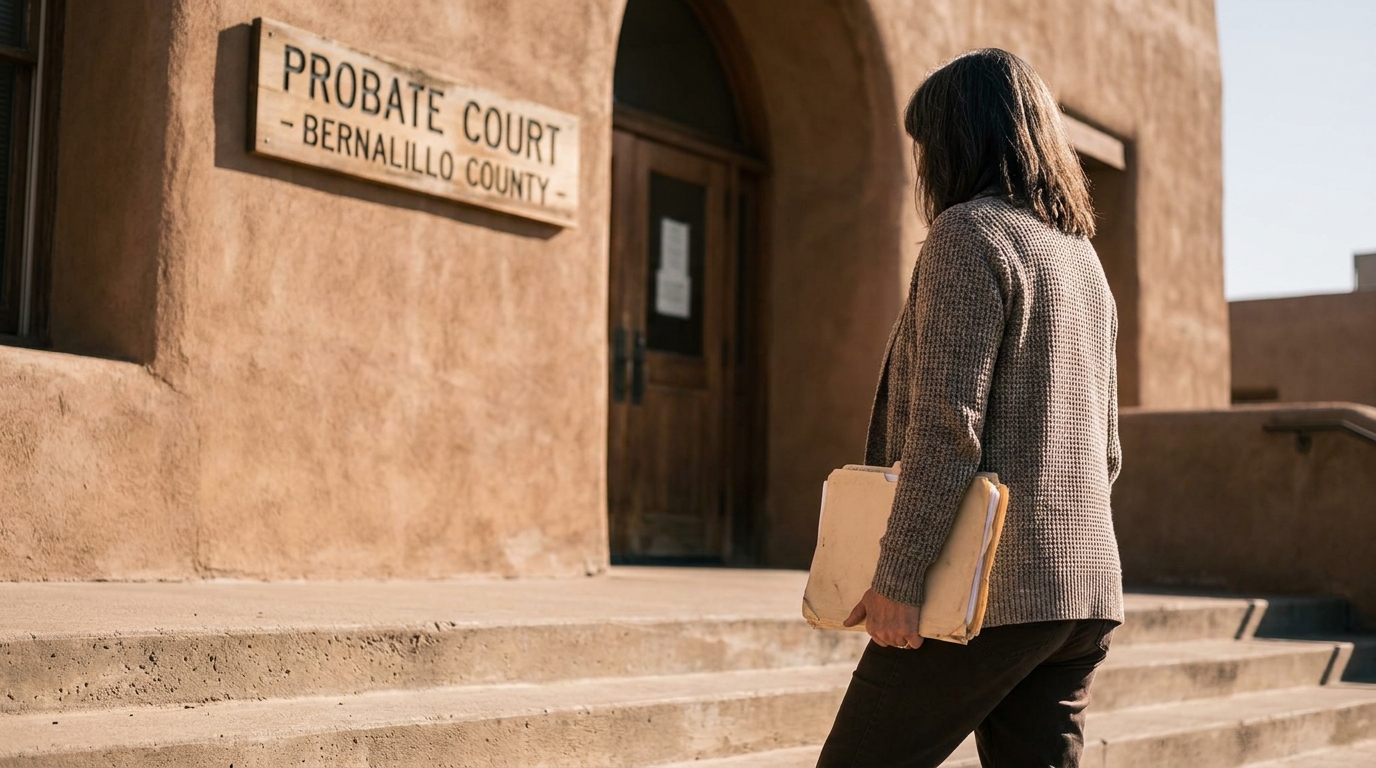
Why Step-Relationships Do Not Create Inheritance Rights
New Mexico defines who inherits very narrowly, and step status alone never makes the cut. When a person dies without a valid will, the estate passes to "heirs," a term with specific statutory meaning. Under the New Mexico Probate Code, heirs are persons, including the surviving spouse and the state, entitled under intestate succession statutes to the decedent’s property. Because that definition ties to blood and legal adoption, a stepchild who was never legally adopted falls outside the group.
The statutory hierarchy makes this clear. Under New Mexico intestate law, the estate passes first to the decedent’s descendants, then parents, then descendants of parents, then grandparents and their descendants. Stepchildren appear nowhere in that chain. Review the controlling text in New Mexico’s intestate succession rules for heirs.
This framework comes from the Uniform Probate Code. New Mexico’s intestate succession law, repealed and reenacted in 1993, follows the UPC framework defining heirs based on blood or legal relationships, not step-relationships. The absence of stepchildren is deliberate, not an oversight.
💡 Pro Tip: If your goal is to leave property to a stepchild, do not assume "everyone knows what I wanted." Intestate succession follows the statute, not family expectations, so your intentions need proper documentation.
The One Narrow Path: Descendants of a Deceased Spouse
There is a single, limited situation where a stepchild’s family line can inherit, but it almost never applies. The 2011 amendment, effective January 1, 2012, allows descendants of a deceased spouse to inherit only if the decedent has no surviving descendants, parents, descendants of parents, grandparents, or descendants of grandparents.
That rule only opens after the entire standard hierarchy is exhausted. If there is no taker under the standard hierarchy but the decedent has one deceased spouse with descendants who survive the decedent, the estate passes to that spouse’s descendants by representation.
The provision draws a sharp line around who qualifies. The deceased-spouse provision only applies if the stepparent’s spouse died while still married to the decedent, excluding divorced spouses. The statute defines "deceased spouse" as an individual to whom the decedent was married at the individual’s death, and does not include divorced spouses. Because multiple conditions must align, treat this as a rare backstop, not a reliable plan.
How the Estate Actually Gets Divided
Without a will, the split depends on whether the decedent had children and the property type. New Mexico distinguishes between community and separate property, affecting the surviving spouse’s share. If the decedent had children and no will, the children or their heirs receive 75% of separate property, and the surviving spouse receives 25%, while the spouse receives all community property.
When there are no biological or adopted children, the spouse’s share grows. If the decedent has no surviving issue, the surviving spouse inherits the entire separate property estate. Because stepchildren are not considered issue, they do not reduce the spouse’s share. The statutory language appears in the surviving spouse’s intestate share provision.
Here is how step status compares to other relationships under intestacy:
| Relationship to Decedent | Treated as an Heir? |
|---|---|
| Biological or legally adopted child | Yes |
| Biological child adopted by a stepparent or relatives | Yes |
| Biological child adopted by others | No |
| Stepchild (not legally adopted) | No |
| Foster child | No |
Adoption is the dividing line. A decedent’s biological child adopted by a stepparent or relatives remains an heir, but a biological child adopted by others does not. Legally adopting a stepchild converts a non-heir into a full heir.
💡 Pro Tip: Survivorship timing matters. In New Mexico, any heir who fails to survive a decedent by 120 hours is deemed to have died before the decedent, shifting how shares pass.
How an Estate Planning Attorney in Albuquerque Can Protect Stepchildren
The simplest and most reliable fix is a will. While stepchildren cannot inherit under intestate succession, they can be named as beneficiaries in a will. A properly executed document avoids the guesswork intestacy forces on families. Working with a local estate planning attorney in Albuquerque means getting a plain-English conversation about what you want, not a template.
A will also lets you control more than who is included. A decedent can use a will to expressly exclude or limit the right of an individual or class to succeed to property passing by intestate succession. The foundational rule that property not disposed of by will passes to statutory heirs is set out in the New Mexico statute on intestate succession basics.
When you plan, consider these protections for a blended family:
- A will or trust that names each stepchild you wish to include, by name, to avoid ambiguity.
- Beneficiary designations on accounts and policies that match your overall plan.
- A clear decision about whether legal adoption fits your family’s goals.
- A backup or contingency clause in case a beneficiary does not survive you.
Local, face-to-face guidance makes the difference. A relationship with a community attorney means someone is there to answer questions after the documents are signed. At Walk-in Wills, planning is handled in person with on-site notaries and witnesses, typically with a roughly one-week document turnaround. You can read more on our estate planning blended families resources.
💡 Pro Tip: Update your plan after major life events such as marriage, divorce, birth, or adoption. An outdated document can unintentionally disinherit the stepchild you meant to protect.
What the Case Law Confirms About Step and In-Law Status
New Mexico courts have long reinforced that marriage-based relationships do not create inheritance rights. Case law confirms that a spouse of a deceased child is not considered "issue" for inheritance purposes. The principle comes from In re Vigil’s Estate, 1934-NMSC-052.
Both statute and courts point in the same direction: blood and legal adoption matter, while step and in-law connections, standing alone, do not. For a deeper walkthrough of how property moves through probate, our overview of the New Mexico estate distribution process explains the steps families face.
Frequently Asked Questions
1. Can my stepchild inherit from me if I die without a will?
Generally, no. A stepchild who has not been legally adopted is not classified as an heir under New Mexico intestate law, so the estate would pass to your blood or adopted relatives. The most direct way to include a stepchild is to name them in a properly executed will.
2. Does adopting my stepchild change their inheritance rights?
Yes. A legally adopted child is treated like a biological child for intestate succession purposes. Adoption is a significant legal step with lasting consequences, so discuss it carefully with counsel.
3. What is the "deceased spouse’s descendants" rule, and could it help my stepchild?
It is a narrow backup provision that rarely applies. It only allows a deceased spouse’s descendants to inherit when there are no surviving descendants, parents, descendants of parents, or grandparents and their descendants. It also excludes divorced spouses.
4. If my spouse and I have no biological children, will my stepchildren inherit my separate property?
No, the surviving spouse generally takes it. Because stepchildren are not "issue" of the decedent, they do not reduce or share in the spouse’s intestate portion. A will is needed to direct property to a stepchild.
5. Can I leave specific gifts to a stepchild even if they are not an heir?
Yes. You can leave property to a stepchild through a valid will or other estate planning tools. This is the most reliable way to ensure your wishes for a blended family are honored.
Protecting the Family You Choose
Intestate succession in New Mexico rewards legal and biological ties, meaning stepchildren are left out unless you take deliberate action. The statutes and case law are consistent, and the deceased-spouse exception is too narrow to rely on. The good news is that a thoughtfully drafted will or trust puts you in control of who receives what.
If you want a blended family estate plan that reflects your actual wishes, the attorneys at Walk-in Wills are ready to help. Call (505) 903-7000 to schedule your free one-hour consultation, or send us a message through our client contact form so we can get your documents done right.