
How Real Estate Inside a Santa Fe Trust Actually Works
Key Takeaways: When a Santa Fe trust holds real property, the trustee gains broad authority to manage, sell, lease, mortgage, improve, and insure that real estate within the limits of the trust instrument and New Mexico law. Proper titling and recording are critical, as they affect every transaction. Trustees hold wide statutory powers, including selling, mortgaging (even beyond the trust’s duration), developing land, granting easements, and leasing for natural resource extraction. They must insure property and manage environmental risk, with the right to decline burdened property before accepting it. Personal liability generally attaches only when the trustee is personally at fault, and trust property is shielded from the trustee’s own creditors. Practical concerns like proving authority through a certification of trust and filing the New Mexico FID-1 fiduciary return make early legal guidance worthwhile.
When a Santa Fe trust holds real property, the trustee gains broad authority to manage, sell, lease, mortgage, insure, and protect that real estate within the boundaries of the trust instrument and New Mexico law. The trustee steps into a fiduciary role and may handle the property much like an owner would, while remaining accountable to beneficiaries. Most questions trustees ask are about what they can do, what they must do, and where personal liability begins.
If you are a newly appointed trustee or a grantor planning ahead, working with a trust attorney in santa fe early can prevent costly title and tax mistakes. Walk-In Wills offers face-to-face guidance through these decisions, and you can reach the team at Walk-In Wills, call (505) 903-7000, or use the firm’s online contact form to schedule a conversation.
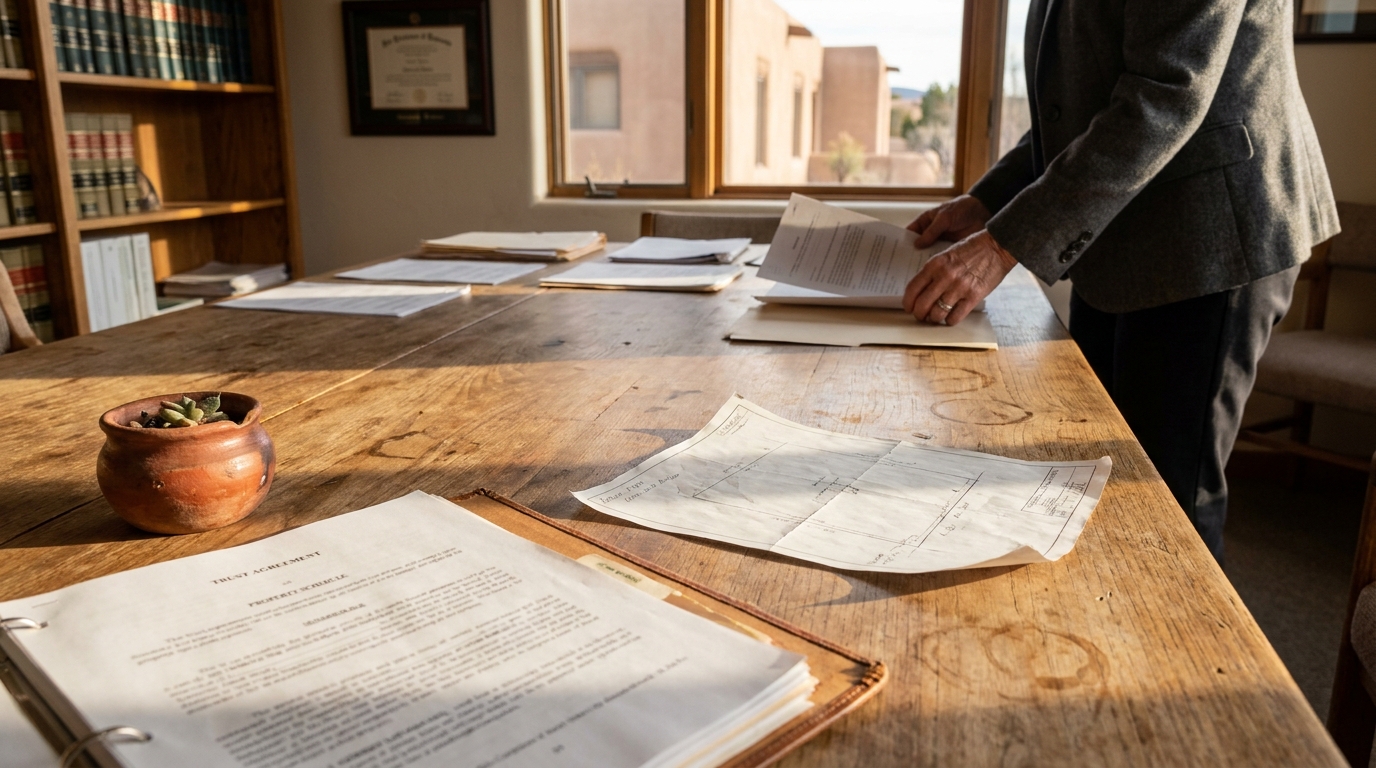
Why Title and Recording Matter First
The first thing a trustee should confirm is how title to the real property is held and recorded. Under Section 46A-8-810(C), a trustee shall cause the trust property to be designated so that the interest of the trust, to the extent feasible, appears in records maintained by a party other than a trustee or beneficiary. For real estate, the deed and county records should reflect the trust’s interest accurately.
Title affects everything that comes later, from selling to mortgaging to passing the property at death. Section 46A-1-103(L) defines "property" as anything that may be the subject of ownership, whether real or personal, legal or equitable, or any interest therein. When title is sloppy, lenders, buyers, and title companies may stall a transaction.
💡 Pro Tip: Before signing anything, verify the deed names the trust correctly, including the trustee’s name and trust date. A wording error can delay closing for weeks.
The Powers a Trustee Holds Over Trust Real Property
New Mexico grants trustees a wide menu of powers over real estate held in trust. These powers exist by default unless the trust instrument limits them. The trustee may acquire or sell property, for cash or on credit, at public or private sale, under Section 46A-8-816(B), and may borrow money, with or without security, and mortgage or pledge trust property for a period within or extending beyond the duration of the trust under Section 46A-8-816(E). A trust mortgage can outlast the trust itself.
Beyond buying and selling, the trustee can actively develop and maintain the land. The detailed grant of authority appears in the state’s trustee powers statute. Under Section 46A-8-816(H), the trustee may construct, make ordinary or extraordinary repairs to, alterations to, or improvements in buildings or other structures, demolish improvements, subdivide or develop land, dedicate land to public use or grant public or private easements, and make or vacate plats and adjust boundaries.
Common powers a trustee may exercise over real estate include:
- Selling or buying property for cash or on credit, subject to the duty of prudence
- Mortgaging or pledging the property as security for a loan
- Repairing, improving, subdividing, or developing the land
- Granting easements, adjusting boundaries, and dedicating land to public use
- Leasing the property, including for natural resource exploration
Leasing is its own important power, especially for land in New Mexico. Section 46A-8-816(I) allows a trustee to enter into a lease for any purpose as lessor or lessee, including a lease or other arrangement for exploration and removal of natural resources, with or without the option to purchase or renew, for a period within or extending beyond the duration of the trust. For trust land New Mexico families have held for generations, mineral and grazing leases are frequently part of the picture.
Protecting the Property and Managing Risk
A trustee must insure the real estate and actively manage environmental risk. Section 46A-8-816(K) empowers the trustee to insure the property of the trust against damage or loss and to insure the trustee, the trustee’s agents, and beneficiaries against liability arising from the administration of the trust. The duty of prudent administration generally makes carrying such coverage necessary.
Environmental liability deserves special attention when a trust holds land or older buildings. Under Section 46A-8-816(M), the trustee may inspect or investigate property, take action to prevent, abate, or otherwise remedy any actual or potential violation of any environmental law, and even decline to accept property into trust when it is burdened with environmental liability.
💡 Pro Tip: If real estate being transferred has a commercial history, gas tanks, or agricultural chemicals, request a phase one environmental review before accepting it.
When the Trustee Is Personally on the Hook
Trustees worry about personal liability, and New Mexico law sets a fault-based standard. Under Section 46A-10-1010(B), a trustee is personally liable for torts committed in the course of administering a trust, or for obligations arising from ownership or control of trust property, including liability for violation of environmental law, only if the trustee is personally at fault. A careful trustee who documents decisions is well positioned.
Trust property is also shielded from the trustee’s own creditors. Section 46A-5-507 provides that trust property is not subject to personal obligations of the trustee, even if the trustee becomes insolvent or bankrupt. That protection underscores why proper titling matters.
| Scenario | General Rule | Governing Section |
|---|---|---|
| Selling or mortgaging trust real estate | Permitted, subject to fiduciary duty | 46A-8-816(B) (sale); 46A-8-816(E) (mortgage) |
| Insuring the property | Required of the trustee | 46A-8-816(K) |
| Personal liability for property obligations | Only if personally at fault | 46A-10-1010(B) |
| Creditor reach against trust property | Shielded from trustee’s personal debts | 46A-5-507 |
Working With a Trust Attorney in Santa Fe on Transfers and Taxes
Two practical issues come up constantly: proving authority to third parties and handling taxes. When a trustee sells or refinances, a certification of trust often substitutes for handing over the entire trust instrument, and Section 46A-10-1013(A)(8) requires that certification to state the manner of taking title to trust property. Title companies and lenders rely on this document.
Taxes follow the property, and New Mexico has its own fiduciary filing. Every fiduciary who must file a federal Fiduciary Income Tax Return, federal Form 1041, must also file a FID-1, New Mexico Fiduciary Income Tax Return, with an exception for grantor trusts under federal regulation 1.671-4(a). You can review the state’s overview of the fiduciary income tax for trusts and estates. A trust is generally treated as domiciled in New Mexico if the trustee is a resident of New Mexico or if the principal place from which the trust is managed or administered is in New Mexico.
Trust administration is not a one-time event. Rental income, repairs, a sale, or a question about a trust deed can surface long after the documents are signed. New Mexico trusts are governed by the Uniform Trust Code, codified at Chapter 46A of the New Mexico Statutes Annotated, while probate questions may arise when trust-held real property passes at death fall under the Uniform Probate Code at Chapter 45. Having a trust attorney in santa fe who answers the phone two weeks later keeps real estate trust New Mexico administration on track. You can browse more guidance on the firm’s trusts in New Mexico resource library, and learn how the team supports trustees through trust holding real property.
💡 Pro Tip: Keep a single folder with the deed, certification of trust, insurance policies, and tax filings. When a buyer, lender, or beneficiary asks for proof, you will have it ready.
Frequently Asked Questions
1. Can a trustee sell real estate held in a New Mexico trust?
Generally, yes. Section 46A-8-816(B) allows a trustee to acquire or sell property for cash or on credit at public or private sale, subject to the trust’s terms and the duty of prudence.
2. Is the trustee personally liable for the trust’s real property?
Usually only when personally at fault. Under Section 46A-10-1010(B), liability for obligations arising from ownership or control of trust property attaches only if the trustee is personally at fault.
3. Do I have to give a buyer the entire trust document?
Often not. A certification of trust under Section 46A-10-1013(A)(8) can stand in for the full instrument and must state the manner of taking title to trust property.
4. Does a trust that owns New Mexico real estate have to file a state tax return?
In many cases, yes. A fiduciary required to file federal Form 1041 generally must also file the New Mexico FID-1 return, with a limited exception for certain grantor trusts.
5. Can a trust mortgage last longer than the trust itself?
It can. Section 46A-8-816(E) permits a trustee to mortgage or pledge trust property for a period within or extending beyond the duration of the trust.
Bringing It All Together
A Santa Fe trust that holds real property gives the trustee strong, owner-like powers paired with real fiduciary duties. The trustee may sell, mortgage, lease, improve, and insure the property, while keeping title accurate, managing environmental risk, and filing the right tax returns. Personal liability is generally limited to situations of personal fault, and trust property stays protected from the trustee’s own creditors.
The simplest way to get it right is an unhurried, plain-English conversation with a local attorney. For face-to-face help with trust real property Santa Fe owners care about, connect with Walk-In Wills, call the office at (505) 903-7000, or learn more about the firm’s estate planning Santa Fe services at walkinwills.com.