
Understanding the New Mexico Notice to Creditors
Key Takeaways: A New Mexico notice to creditors is the formal probate step where the personal representative alerts creditors that the estate is open and claims must be presented within a limited window, allowing legitimate debts to be paid and the remainder distributed to heirs. This process protects both the estate and beneficiaries. It is governed by New Mexico’s non-claim statute (NMSA 1978, §§ 45-3-801 to 45-3-806), under which contract-based claims not presented in time are generally barred. Following the U.S. Supreme Court’s ruling in Tulsa Professional Collection Services, Inc. v. Pope, known or reasonably ascertainable creditors are entitled to actual mailed notice rather than publication alone. Key deadlines include appointing a representative no sooner than 120 hours after death, a four-month creditor claim window from first publication, and no closing before six months after appointment. Because Probate Courts have limited authority and outcomes are fact-sensitive, working with a licensed New Mexico probate attorney helps protect your interests.
A New Mexico notice to creditors is the formal probate step where the personal representative alerts creditors that the estate is open and they have a limited window to present claims. It lets the estate settle legitimate debts, cut off stale ones, and distribute what remains to heirs. If you are an heir waiting on an inheritance, this process directly affects how much reaches you and how long it takes.
If you need guidance from a licensed New Mexico attorney, the team at Walk-in Wills is ready to help. Call our office at (505) 903-7000 or reach out through our contact page to schedule a conversation.
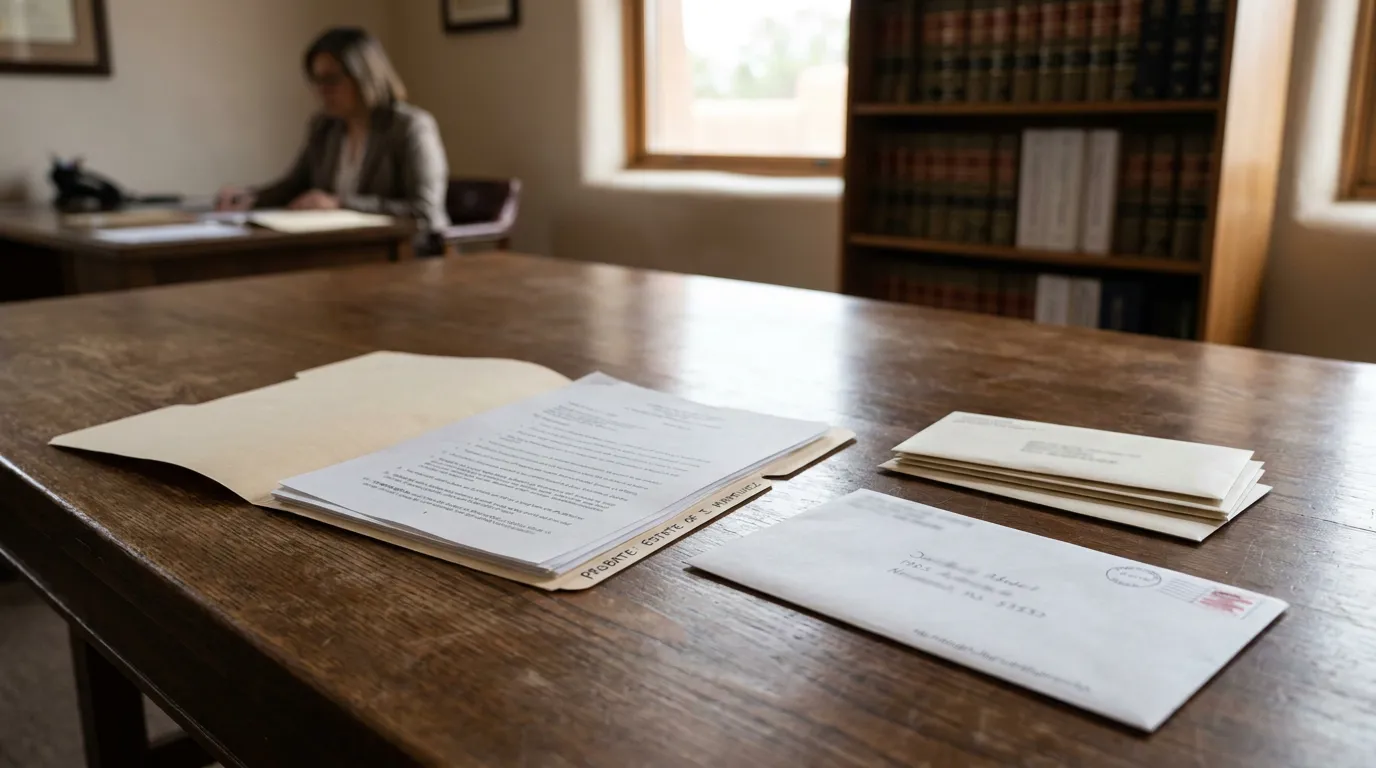
Why the Notice to Creditors Matters in Probate
The notice to creditors protects both the estate and those who stand to inherit from it. Estates rarely close cleanly until debts are addressed, and skipping this step can leave heirs exposed to surprise claims later. A well-handled notice keeps the timeline moving and reduces disputes.
The personal representative’s authority is not permanent. Once the probate file closes, the representative no longer has authority to act for the estate. That is why a probate case should generally stay open until all creditors receive notice, claims are resolved, taxes are paid, and assets are distributed. Closing prematurely can create problems that are difficult to unwind.
The Legal Framework Behind Creditor Claims
New Mexico’s approach to creditor claims rests on the non-claim statute. This framework comprises several sections of the state Probate Code, specifically NMSA 1978, §§ 45-3-803, 45-3-804, and 45-3-806, which set out how creditor claims are handled and when they are barred. The state’s official notice-to-creditors forms also point to NMSA 1978, Sections 45-3-801 to 45-3-803 as the governing provisions.
The consequences of missing the window are significant. Under the non-claim statute, if a claim based upon contract was not presented within the time limit, the claim was generally barred, subject to certain exceptions. Courts read these deadlines strictly, so a creditor who sleeps on a claim can lose it entirely.
The Due Process Wrinkle From Tulsa v. Pope
One landmark decision reshaped how notice must be given. In Tulsa Professional Collection Services, Inc. v. Pope, the U.S. Supreme Court held that Oklahoma’s non-claim statute, which allowed personal representatives to give notice by publication alone, violated due process as applied to known or reasonably ascertainable creditors. Because Oklahoma’s provisions were very similar to New Mexico’s, the ruling carries direct implications here. You can read more about the reasoning in this New Mexico Law Review analysis.
The practical takeaway is that known or reasonably ascertainable creditors generally deserve more than newspaper publication. In many cases, that means actual mailed notice to creditors the representative knows about or could reasonably identify. This is a fact-sensitive area, and outcomes depend on what the representative knew or should have known.
How the New Mexico Notice to Creditors Process Unfolds
The creditor notice process generally follows a predictable sequence once probate is opened. New Mexico allows both formal and informal probate, and the state’s self-representation portal for probate proceedings covers these proceedings from beginning to end.
Here is how the steps typically fit together:
- Opening probate: A case is filed, and a personal representative is appointed.
- Publishing and mailing notice: The representative publishes notice and, where appropriate, mails notice to known creditors.
- Claim period runs: Creditors present claims within the statutory window.
- Resolving claims: Valid claims are paid from estate assets, and taxes are addressed.
- Closing: Once obligations are satisfied, the estate is distributed and the case is closed.
Choosing the right person to serve as representative is a foundational decision. The individual who takes on this role manages notice, claims, and distribution. Our guide on who can serve as personal representative walks through eligibility and responsibilities in more detail.
💡 Pro Tip: Keep a running log of every creditor you are aware of, including account numbers and mailing addresses, before notice goes out. Reasonably ascertainable creditors may be entitled to direct notice, and a thorough list reduces the chance of a claim resurfacing after closing.
What Counts as a Creditor and What Probate Courts Can Do
The term "creditor" is broader than many people expect. A creditor generally includes those holding claims for credit cards, mortgages, utilities, medical bills, taxes, and other alleged debts against the estate. That wide definition is why careful attention to the notice step matters.
New Mexico Probate Courts have real but limited authority over these claims. Probate Courts generally cannot determine the validity of a claim against an estate, direct the payment of claims, or hold funds in escrow to pay creditors. Those limits mean disputes over whether a debt is legitimate usually fall outside the Probate Court’s role, and estate administration is separate from any civil lawsuit a creditor might pursue.
Where and When Probate Gets Filed
Jurisdiction and timing set the stage for everything else. Probates in New Mexico are generally filed in the county where the decedent was domiciled at death, and Probate Courts share concurrent jurisdiction with District Courts over informal probate proceedings. Normally, a probate case must be filed within three years of the decedent’s death, subject to exceptions, such as when there is no will and probate is necessary to confirm title to real estate.
Interested parties, including creditors, have a tool called a Demand for Notice. A Probate Court cannot accept a Demand for Notice unless a probate has already been filed in that court. This ensures the right parties stay informed as the case moves forward.
Deadlines That Can Make or Break a Claim
Deadlines drive the creditor notice process. Creditors generally must present claims within four months after the date of first publication of the notice to creditors. Even where notice is never published, claims against the estate are generally barred no later than one year after the decedent’s death. The estate cannot be closed earlier than six months after the personal representative’s appointment.
There is also a short waiting period at the start. Under New Mexico law, a personal representative cannot be appointed until at least 120 hours, or five days, have passed after death. The table below summarizes the key timing benchmarks.
| Milestone | General Timing |
|---|---|
| Appointing a personal representative | At least 120 hours (5 days) after death |
| Filing the probate case | Generally within 3 years of death, subject to exceptions |
| Creditor claim window | Within 4 months of first publication of notice |
| Earliest estate closing | No sooner than 6 months after appointment |
These timeframes are general benchmarks, and courts may treat exceptions narrowly. Whether a particular deadline is tolled or extended depends on specific facts, and such relief is not automatic. For heirs who suspect procedural defects or want to understand their standing, a conversation with a new mexico notice to creditors lawyer can clarify available options.
Frequently Asked Questions
1. Does every New Mexico estate require a notice to creditors?
Not every estate follows the identical path, but notice is a standard part of most probate proceedings. Because a case generally should stay open until creditors are notified and claims resolved, skipping notice is rarely advisable. The Taos County overview of when probate is needed explains scenarios where formal administration comes into play.
2. What happens if a creditor misses the four-month deadline?
A creditor who fails to present a contract-based claim within the statutory window generally has that claim barred, subject to limited exceptions. Courts interpret these exceptions narrowly. The outcome can still depend on whether the creditor received proper notice, though claims are generally barred in any event no later than one year after death.
3. Can the Probate Court decide whether a debt is valid?
Generally, no. New Mexico Probate Courts typically cannot determine the validity of a claim, direct payment, or hold funds in escrow for creditors. Disputes over a debt’s legitimacy usually must be resolved outside that limited probate role.
4. Is publication alone enough to notify creditors?
Publication may not be sufficient for creditors the representative knows about or could reasonably identify. Following Tulsa v. Pope, known or reasonably ascertainable creditors may be entitled to actual notice. Whether publication alone satisfies due process is fact-dependent.
5. How long does the creditor phase usually take?
In many cases, the creditor window runs about four months from first publication, while the estate itself cannot close before six months after appointment. The full timeline varies with the estate’s complexity, tax issues, and whether any claims are contested.
Bringing the Estate Safely Across the Finish Line
Handled well, the notice to creditors process protects the estate, honors legitimate debts, and clears the way for heirs to receive what they are owed. The rules around creditor claims, filing deadlines, and court authority all work together, and small missteps in timing or notice can create lasting complications. Working with a local, licensed New Mexico probate attorney gives you accountability and someone you can call back when questions arise.
At Walk-in Wills, we guide New Mexico families through estate administration with face-to-face attention and a plan built around your circumstances. New estate matters start with a one-hour free consultation, and we offer in-person and fully online options, on-site notaries and witnesses, and same-day or mobile services when the situation calls for it. To get started, visit Walk-in Wills, call (505) 903-7000, or send us a message online today.