
Planning for the Dog or Cat Who Will Outlive You: Arizona’s Pet Trust Statute Explained
Key Takeaways: A pet trust under A.R.S. § 14-2907 is a legally enforceable arrangement that sets aside money for a specific animal’s care and names someone to manage it. Arizona supports this through § 14-2907 and § 14-10408, both validating trusts for designated animals that terminate when no covered animal remains alive. The trust covers only animals alive during your lifetime. A well-drafted plan separates trustee, caregiver, and enforcer roles so no one controls both the animal and funds. Funding should be based on documented costs, as courts may reduce excessive amounts. Administration requires no mandatory filings unless ordered, making the enforcer role especially valuable. Every state now recognizes pet trusts, so Arizona plans generally travel with your caregiver, though clear drafting and named successors remain essential.
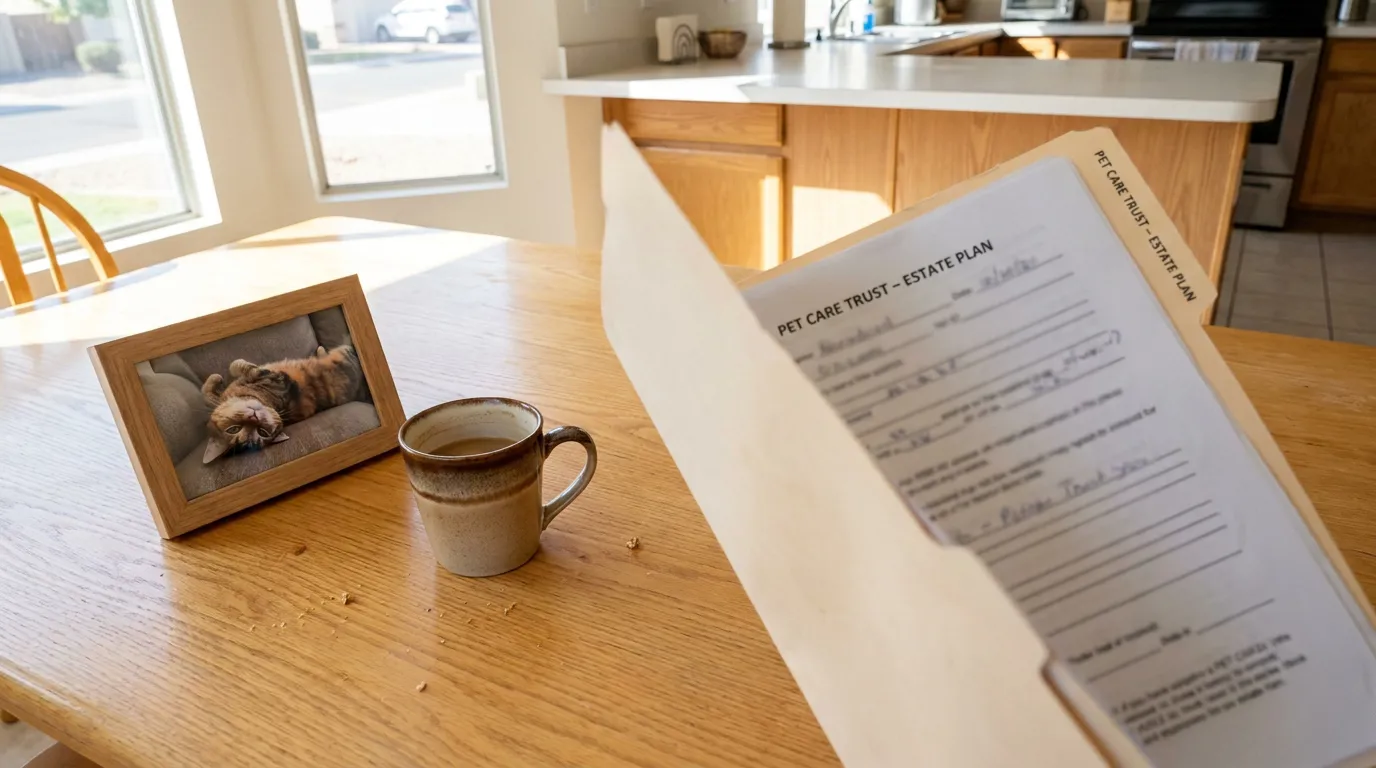
A pet trust in Arizona is a legally enforceable arrangement that sets aside money for the care of your animal and names someone to spend it on that animal’s behalf. Under A.R.S. § 14-2907(B), a trust for the care of a designated domestic or pet animal is valid and terminates when no living animal is covered. For a Mesa pet owner worried about who feeds the horse or keeps the senior labrador out of a shelter, that statute converts a hopeful conversation into a funded, enforceable obligation.
If you are ready to put that protection in writing, Walk-in Wills can help you build a plan around your actual animals and budget. Call 480-605-7000 to schedule a one-hour free consultation for new estate-planning matters, or reach our team here to get started.
Two Statutes Give Arizona Pet Trusts Their Backbone
Arizona pet trusts rest on two separate provisions: § 14-2907 and § 14-10408. The older statute has been on the books since the mid-1990s, and the Trust Code provision followed in 2009. Both remain in force and permit an animal to be the beneficiary of a funded trust.
Under A.R.S. § 14-10408(A), a trust may be created for an animal alive during the settlor’s lifetime and terminates on the death of that animal or, if covering multiple animals, on the death of the last surviving animal. Two practical limits follow: your pet must be alive during your lifetime, and the trust cannot run indefinitely.
That second limit matters more than most expect. A pet trust generally cannot cover future litters, rescues, or animals acquired after your death. If you anticipate adopting again, the plan needs updating, making an ongoing relationship with a local attorney more useful than a one-time form.
How a Mesa Pet Trust Actually Functions Day to Day
The trust separates three roles: trustee, caregiver, and enforcer. The trustee holds and disburses money. The caregiver houses and cares for the animal. The enforcer ensures the first two do their jobs. Many owners deliberately split trustee and caregiver so no one controls both the animal and funds.
Under § 14-2907(C)(1), except as expressly provided otherwise in the trust instrument, no portion of the principal or income may be converted to the use of the trustee or to any use other than for the trust’s purposes or for the benefit of a covered animal. Unless the document says otherwise, a trustee cannot treat the fund as a bonus.
| Role | Primary Job | Statutory Anchor |
|---|---|---|
| Trustee | Holds and distributes funds solely for the animal | § 14-2907(C)(1) |
| Caregiver | Provides daily housing, food, and veterinary care | Defined by the trust instrument |
| Enforcer | Petitions a court if the trust is ignored | § 14-2907(C)(4) |
| Court | Appoints a trustee if none will serve | § 14-2907(C)(7) |
Naming an enforcer is one of the most useful decisions you can make. Section 14-2907(C)(4) provides that the intended use can be enforced by a person designated in the trust instrument or, if none, by someone appointed by a court. Section 14-10408(B) similarly allows a person with an interest in the animal’s welfare to petition for appointment or removal of an enforcer. Naming someone in advance avoids delay and expense.
💡 Pro Tip: Choose an enforcer who is neither caregiver nor trustee. A neutral party has no financial reason to look away.
Funding a Pet Trust Arizona Courts Will Not Trim Back
Overfunding is the most common mistake, and Arizona law addresses it directly. Under § 14-2907(C)(6), a court may reduce amounts that substantially exceed what the intended use requires, with reduced amounts passing as unexpended trust property. Section 14-10408(C) is comparable. Similar limits exist in other states.
The fix is documentation. A funding figure tied to realistic numbers is more defensible than a round number chosen from affection.
Build the Number From Real Costs
Consider gathering before your consultation:
- Annual food, grooming, and routine veterinary costs
- Current medications and specialty care needs
- Realistic remaining life expectancy
- Boarding, transport, or end-of-life expenses
- A modest cushion for emergencies and inflation
Arizona law also addresses unavailable trustees. Section 14-2907(C)(7) provides that if no trustee is willing or able to serve, a court shall name one and may order transfer when necessary. A court-selected stranger is rarely your first choice. Naming successors in the document is better.
Light Administration Is a Real Advantage of This Arizona Trust Statute
Arizona keeps pet trust administration simple. Under § 14-2907(C)(5), except as ordered by a court or required by the trust instrument, no filing, report, registration, periodic accounting, separate maintenance of funds, appointment, or fee is required. That may reduce burden on a family member serving as trustee, though fiduciary duties still apply.
There is a tradeoff. Fewer mandatory reports mean less automatic oversight, which is why the enforcer role and voluntary accounting requirements in the instrument carry real weight. Many owners require an annual summary in the document itself.
How a Pet Trust Fits the Rest of Your Plan
A trust for pets rarely stands alone. It is usually a provision inside a broader revocable plan, so understanding how a living trust works in Arizona helps before deciding whether to create a standalone animal trust or fold provisions into an existing document.
Leftover funds also need a destination. Under § 14-2907(C)(2), on termination the trustee transfers unexpended property as directed in the trust instrument; if created in a nonresiduary clause, under the residuary clause; and otherwise to the transferor’s heirs under § 14-2711. If you prefer the remainder go to a rescue organization or grandchild, that instruction belongs in the document, and a pet trust Arizona lawyer can align it with your distribution plan.
When Courts Read Your Words Generously
Arizona courts are directed to read these documents in favor of the owner’s wishes. Section 14-2907(B) requires liberal construction to bring the transfer within the pet trust provision, to presume against merely precatory disposition, and to carry out the transferor’s general intent. Extrinsic evidence is admissible.
That is helpful but not a substitute for clear drafting. Liberal construction may rescue an ambiguous clause; it cannot manufacture funding never transferred or name a caregiver never identified.
What Happens If the Caregiver Moves Out of Arizona
Relocation is a common worry, and the legal landscape is reassuring. All 50 states and the District of Columbia now have pet trust laws, with Minnesota the last to enact one in 2016. An Arizona-created trust will often remain enforceable if your caregiver takes the animal to another state, though state laws differ and questions about governing law and enforcement should be reviewed with counsel.
You can plan for it in advance. Provisions addressing relocation, successor caregivers, governing law, and transport cost reimbursement are simple to include when drafted intentionally. The ASPCA maintains a helpful overview of state pet trust laws if you want background.
💡 Pro Tip: Have a candid conversation with your intended caregiver before signing. A named caregiver who declines at the worst moment is the most avoidable failure point.
Why a Local Attorney Matters for a Companion Animal Trust
These are personal decisions deserving an unhurried, plain-English conversation. Walk-in Wills serves clients face to face and fully online across Arizona, including Chandler, Gilbert, and Queen Creek, with mobile and Saturday appointments available. That accessibility matters when the planner is mobility-limited or coordinating a parent’s plan from out of state.
Proper execution also matters. On-site notaries and witnesses help ensure documents are signed correctly, and flat-fee pricing with roughly one-week turnaround reduces guesswork. Most importantly, you have someone in the community to call when questions arise.
Frequently Asked Questions
1. Can I create a pet trust for an animal I plan to adopt later?
Generally no. Section 14-10408(A) permits trusts for animals alive during the settlor’s lifetime, and § 14-2907(B) speaks of designated animals, so animals acquired after your death typically cannot be covered. Update your documents after each adoption.
2. How much should I put into a Mesa pet trust?
There is no statutory figure. Because § 14-2907(C)(6) allows courts to reduce amounts substantially exceeding intended use, and § 14-10408(C) permits similar review, funding should be tied to documented annual costs and realistic life expectancy rather than symbolic numbers.
3. What if my trustee refuses to serve when the time comes?
Under § 14-2907(C)(7), a court shall name a trustee if none is willing or able to serve. Naming two or three successors in the instrument generally avoids that outcome.
4. Does the trustee have to file annual accountings with a court?
Not automatically. Section 14-2907(C)(5) eliminates mandatory filings absent a court order or requirement in the trust instrument. You may write reporting duties into the document if you want oversight.
5. What happens to money left over after my pet dies?
Section 14-2907(C)(2) directs unexpended property first as the trust instrument specifies, then through the will’s residuary clause if applicable, and finally to the transferor’s heirs under § 14-2711. Under § 14-10408(C), property that a court determines exceeds the amount required for the intended use must be distributed to the settlor if then living, or otherwise to the settlor’s successors in interest, except as otherwise provided in the terms of the trust. Name a remainder beneficiary in the document to keep that decision yours.
Turning Good Intentions Into an Enforceable Plan
Arizona gives pet owners a durable framework, but the statute works only as well as the document you sign. Section 14-2907 validates the trust, restricts fund diversion, allows an enforcer, limits overfunding, and directs remainder disposition. Section 14-10408 confirms comparable authority. What the statutes cannot do is choose your caregiver, calculate your funding, or anticipate future adoptions. Those require a real conversation, and results depend on your specific facts.
If your animals are part of your family, they belong in your estate plan. Reach out to Walk-in Wills to discuss a companion animal trust built around your household, call 480-605-7000 to schedule your free one-hour consultation for a new estate-planning matter, or schedule your appointment online today.
Disclaimer: This content is for informational purposes only and is not legal advice. Every case is unique, and results may vary. Consult an attorney about your specific circumstances.