
What It Really Takes to Prove a Handwritten Will in Arizona
Key Takeaways: Arizona courts prove testamentary intent in a holographic will by confirming that the signature and material provisions are in the testator’s own handwriting under A.R.S. § 14-2503, then determining whether the writer meant it to serve as a will under A.R.S. § 14-2502. Handwritten wills are valid without witnesses or notarization, and intent can be shown through extrinsic evidence, including preprinted portions not in the testator’s hand. Capacity under A.R.S. § 14-2501 and valid admission under A.R.S. § 14-3102 are also required. A separate list disposing of tangible personal property may carry weight when it meets A.R.S. § 14-2513 standards. Because intent is fact-sensitive, outcomes vary, and preserving the original document early gives a handwritten will its best footing.
Arizona courts prove testamentary intent in a holographic will by confirming that the signature and material provisions are in the testator’s own handwriting, then looking to the document itself, and where necessary to extrinsic evidence, to establish that the writer meant the paper to serve as a will. For an executor or family member in Mesa holding a loved one’s handwritten pages, the practical question is whether a probate court will treat those pages as a valid will. The answer turns on statutory requirements and the intent the writing reflects.
If you are stepping into this situation and want guidance, the team at Walk-in Wills can help you understand your options. Call us at 480-605-7000 or reach out through our contact page to talk through your next steps with a licensed Arizona estate-planning attorney.
Why Handwritten Wills Are Valid in the First Place
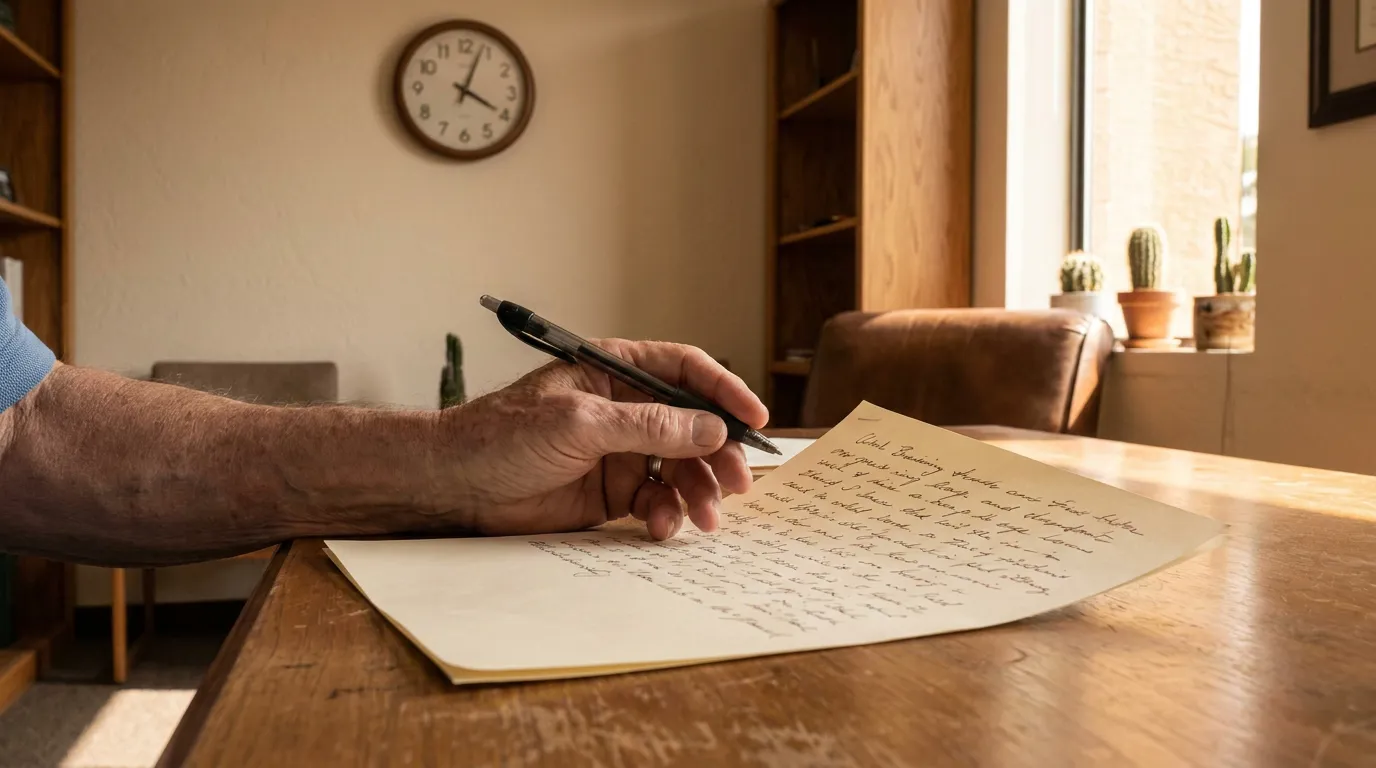
Arizona is one of the states that recognizes handwritten wills without witnesses, which surprises many families who assume every will needs formal signing ceremonies. Under A.R.S. § 14-2503, a will that does not comply with formal execution rules is still valid as a holographic will, whether or not witnessed, so long as the signature and material provisions are in the testator’s handwriting. This statutory basis is what a Mesa probate court relies on when a family presents handwritten pages.
The handwriting requirement is the anchor of the analysis. The "material provisions" generally include the gifts being made and the people receiving them, meaning the core dispositional language must be in the testator’s own hand. Courts examine the writing to confirm authenticity, which is why authenticity of the signature and text becomes central during will admission proceedings.
The Statutory Framework Behind the Rule
Arizona’s will rules live inside Title 14, Chapter 2, Article 5, which sets out who may make a will, how wills are executed, how they are revoked, and how outside documents may be incorporated. For example, A.R.S. § 14-2510 addresses incorporating an outside document, and A.R.S. § 14-2507 governs revocation. These surrounding provisions give context to how a handwritten page fits into the larger scheme a court consults when assessing a holographic instrument.
Capacity sits underneath all of this as a threshold condition. Under A.R.S. § 14-2501, the person making a will must be at least 18 years of age and of sound mind at the time the will is made. If capacity is genuinely in question, the intent analysis becomes far more fact-dependent.
Arizona Holographic Will Requirements and the Role of Intent
Meeting the arizona holographic will requirements involves more than handwriting alone, because the document must also reflect testamentary intent, which is the writer’s intention that the paper operate as a will. Testamentary intent is addressed directly in A.R.S. § 14-2502, which covers execution of paper wills, witnessed wills, holographic wills, and testamentary intent. That statute is the anchor for proving intent in Arizona will disputes.
Arizona law makes proving holographic will intent notably flexible through extrinsic evidence. Under A.R.S. § 14-2502(B), intent that a tangible medium or electronic record constitutes the testator’s will can be established by extrinsic evidence, including, for holographic wills under A.R.S. § 14-2503, portions of the document that are not in the testator’s handwriting. You can review the Arizona will execution statute to see how the Legislature framed this intent requirement.
This point often reassures families who worry that a preprinted form ruins a handwritten will. Because the statute permits courts to consider typed or preprinted language as evidence of intent, a will written on a fill-in-the-blank form is not automatically invalid. The material provisions still need to be handwritten, but the non-handwritten portions may help show the testator meant to create a will.
💡 Pro Tip: If a loved one left handwritten estate wishes, keep the original document unaltered and stored safely. Photographs and copies help, but Arizona probate generally favors the original, and preserving it protects the intent evidence a court may need.
How a Mesa Probate Court Evaluates the Document
Before administration proceeds, a will, including a holographic one, must be declared valid through an informal statement of probate by the registrar or a formal adjudication of probate by the court under A.R.S. § 14-3102. This is the procedural stage where testamentary intent may be examined. In an informal proceeding, the process is generally streamlined and administrative, while formal adjudication invites closer scrutiny.
Courts engaged in will interpretation read the document as a whole to determine what the testator intended. They look at the dispositional language, signature placement, dates where present, and surrounding language that signals a final expression rather than a draft or casual note. Because intent is fact-sensitive, results can differ, and no attorney can promise a particular outcome.
Common Challenges When Proving Intent
Several recurring issues tend to complicate Arizona probate intent when a will is handwritten. These are not reasons to panic, but they are worth understanding early so you can gather the right materials.
- Ambiguous language: vague phrasing about who receives what can make the testator’s intent harder to establish.
- Mixed handwriting and typing: when material provisions appear in preprinted text rather than the testator’s hand, holographic will proof can weaken.
- Missing signature or date: the signature is a statutory requirement, and its absence or placement can raise questions.
- Separate lists and notes: informal side papers may or may not qualify as part of the estate plan.
That last point deserves special attention because Arizona has a specific rule for it. Under A.R.S. § 14-2513(A), a will may refer to a written statement or list to dispose of tangible personal property other than money. To be admissible, A.R.S. § 14-2513(B) requires that the writing be in the testator’s handwriting or signed by the testator and describe the items and devisees with reasonable certainty. You can read the Arizona personal property list statute for the exact language.
Building a Record That Supports Testamentary Intent
Personal representatives strengthen a holographic will’s chances by assembling a clear record of authenticity and intent before the will admission court reviews it. This generally includes the original document, information about who can identify the handwriting, and context about when and why it was created. Thoughtful organization here can make an informal probate far smoother.
Preserving the right materials early is often the difference between a clean admission and a drawn-out review. Our guide on how to preserve evidence for a will walks through practical steps for protecting documents and supporting records. Keeping intent evidence intact protects the beneficiaries’ lawful entitlements and honors what the testator actually wanted.
Why Working With a Local Attorney Matters
Estate matters are personal, and having someone in your community who can sit down with you changes the experience. Walk-in Wills serves clients throughout Mesa, Chandler, Gilbert, and Queen Creek, and offers a fully online process for clients anywhere in Arizona. A free one-hour consultation is available for new estate-planning matters. For families completing an estate, our attorneys can also guide you through estate distribution with an arizona holographic will requirements lawyer who understands the local process.
Frequently Asked Questions
1. Does a holographic will need to be notarized in Arizona?
No, notarization is not required for a holographic will. Under A.R.S. § 14-2503, the will is valid whether or not witnessed, as long as the signature and material provisions are in the testator’s handwriting. Notarization can still add helpful confirmation of authenticity.
2. Can typed or preprinted text appear on a valid holographic will?
Yes, in many cases it can. A.R.S. § 14-2502(B) allows courts to consider portions not in the testator’s handwriting as extrinsic evidence of intent. The material dispositional provisions, however, generally still need to be handwritten.
3. What does testamentary intent Arizona courts look for actually mean?
Testamentary intent means the writer meant the document to function as a will rather than a draft, letter, or note. Courts examine the language, signature, and surrounding context. Because intent is fact-specific, the analysis can vary from one estate to another.
4. Is a separate list of personal property enforceable?
It can be, under certain conditions. A.R.S. § 14-2513 permits a will to reference a written list disposing of tangible personal property other than money, provided the list is handwritten or signed and describes items and recipients with reasonable certainty.
5. Who decides whether the holographic will is admitted?
The registrar in an informal proceeding or the court in a formal adjudication decides. A.R.S. § 14-3102 requires that a will be declared valid before administration proceeds. The path depends on the facts and whether anyone raises concerns.
Bringing It All Together
Proving testamentary intent in an Arizona holographic will comes down to satisfying the handwriting and signature requirements of A.R.S. § 14-2503, showing intent under A.R.S. § 14-2502, and presenting the document for admission under A.R.S. § 14-3102. Extrinsic evidence, including non-handwritten portions, may support that intent, and a separate property list can carry weight when it meets A.R.S. § 14-2513 standards. Outcomes depend on the specific facts, so early, organized preparation gives a handwritten will its best footing in probate.
You do not have to sort through these statutes alone during a difficult time. Connect with Walk-in Wills for plain-English guidance built around your family’s wishes. Call 480-605-7000 or schedule your consultation online to get started with a licensed Arizona estate-planning attorney today.